
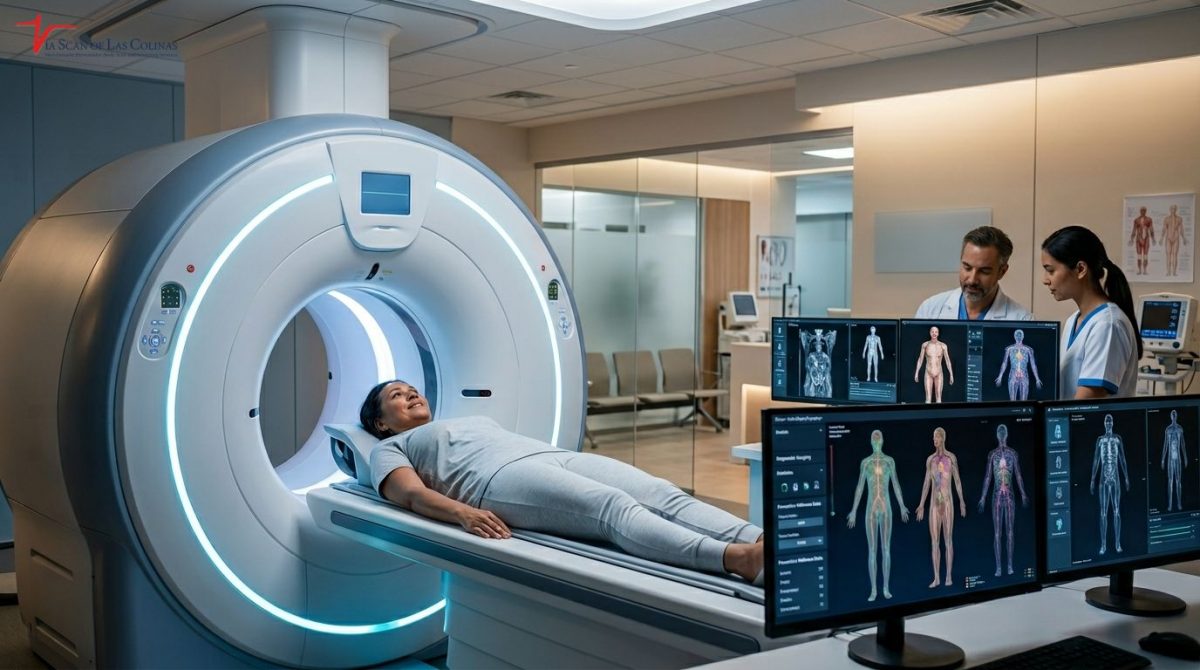

Can you imagine being able to see a clear picture of what is occurring in your body before you start to see some symptoms? That is what preventive health imaging is all about. The majority of severe illnesses do not manifest themselves at an early age. They grow silently, over a period, until they are developed to a sufficient level to bring about any observable trouble. Full-body scans are rewriting that narrative by providing people and their physicians with a proactive view of the internal health – they offer an environment to take action early on, instead of responding later. This is what you should know, in a simple, easy-to-understand manner.
Why Full-Body Scans are Important in Preventive Healthcare?
Whole body imaging provides a complete picture of the body and its internal organs without any surgery or invasive method. The principle itself is quite straightforward: to identify the possible issues prior to them being a major problem. The majority of individuals resort to medical imaging only when they see symptoms which means that by this time, a condition might be very developed. A scan of an early detection of the disease will push that time frame well ahead and provide patients and doctors with more choices and more time to action.
Advantages of active Health Management.
- The advantages of full-body CT scan are not limited to the diagnosis of individuals, but rather they create a health baseline. A clear internal image at some point in time facilitates easier detection of the significant change in future scans and provides the physicians with a reliable point in tracking your health as the years go by and not having to begin all over again every time an issue arises.
- Anticipatory imaging aids in more empowered patient conversations with the healthcare provider. Knowing what goes on in your body will allow you to make healthier lifestyle choices, adhere to specific screening guidelines, and participate in your health more actively – not reacting to the symptoms and forcing the discussion.
What Are the Early-Detection Conditions that Full-Body Scans are Good at?
Early disease detection scans are aimed at the detection of structural and functional abnormalities in various organ systems during one imaging session. Risks and benefits of the full-body CT scan technology have been amply reported – and the scope of conditions that it can indicate as needing further clinical attention is one of the most evident benefits.
Cancer, Heart Disease and Organ Problems.
- The entire body imaging is capable of detecting suspicious masses, nodules, or growths in other organs like the lungs, liver, kidneys, and the colon, in which early changes may exist before any symptoms appear and before early knowledge greatly increases the number of choices available.
- Heart related issues, such as arterial calcification and heart disease onset, may also be observed in the results of full-body CT scan. Early detection of these markers can enable the physicians and patients to control the risk factors by modifying their lifestyles and using medical interventions before they escalate into severe complications.
- Organ anomalies -such as cysts, large lymph nodes and structural defects in the abdomen and pelvis are some of the findings that can be brought to the fore with the help of whole body imaging. Such results do not necessarily signify severe disease, yet they present useful data, which can inform the further medical treatment.
What Are Full-Body Scans and How Do They Check Health Problems Before they Present Symptoms?
In CT, it is a full-body scan that involves a sequence of X-ray images of the body captured at various angles to form detailed cross-sectional images of the inside of the body. These images are processed by a computer to give a detailed visual map that radiologists look through in a systematic manner. It is a non-invasive procedure, does not involve any surgery; it takes a comparatively short time. The advantages of full-body CT scan are that it is able to scan bones, soft tissues, blood vessels and organs in a single scan; giving it a degree of internal viewing that could not be matched using any other physical examination method. When to have a complete body scan? That is a question that is best discussed with your doctor who can evaluate your individual health history and risk factors and then prescribe imaging.
Who is to consider having a Full-Body Scan as a Preventive Care?
What occasion do you take a full-body scan? Although this cannot be answered universally, some people can be better served by proactive whole body imaging due to their unique conditions. The first step to always take before making any imaging appointment is to review the risks and benefits of full-body CT scan technology with a licensed healthcare professional.
Age and Lifestyle Factors
- Adults above 40 years of age are mostly viewed as better-suited to preventative full-body imaging because the chances of internal changes associated with age rise as time goes by. Earlier baseline imaging can also be used to individuals with a family history of cancer, heart disease, or other serious conditions as a part of an overarching preventive health strategy.
- Lifestyle choices, like a smoking history, obesity, high blood pressure or sedentary lifestyle, can increase internal health risks which are not yet causing symptoms. In the case of persons in these groups, a scan of the disease at an early stage can provide valuable information that can assist with more specific preventive health services and informed health choices in the future.
Choose Our Wellness Body Scan
Early Detection Saves Lives!
-
- Accurate
- Quick Result
- Affordable
Conclusion
Being the one to take charge of your health is one of the most knowledgeable choices. ViaScan of Las Colinas provides state-of-the-art preventive imaging (whole-body scans and CT scans) to assist in early awareness as the core component of an integrated health strategy. These services are additional to your current medical care and they are not to replace the clinical diagnosis or treatment. Discuss with your medical provider to find out whether preventive imaging is suitable in your case.