
shutterstock_1556099762-1.jpg
22/Jul/2024

You’ve undoubtedly heard about gallstones if you haven’t personally encountered them. Who knows, maybe someone you know had their gallbladder removed? However, because gallbladder illness encompasses a variety of disorders that affect the gallbladder, the general issue might be perplexing. In this blog, we will dissect the functions and primary ailments that are included in the gallbladder illness category. We’ll go over the symptoms, as well as when scans are required. We will also explain which imaging tests doctors use to check the gallbladder, and where scans such as CT fit in.

What is the role of the gallbladder?

The gallbladder is a little, pear-shaped organ that sits just below your liver on the right side of your belly. It plays an important role in digestion. The primary gallbladder function is to hold bile, a substance your liver produces that aids in fat digestion. Your gallbladder discharges bile into your small intestine when you eat. More bile is needed for meals that include more fat. A gallbladder that isn’t functioning properly can cause many problems, and many disorders can impact it. In more serious cases, your gallbladder may need to be removed. Most people can live a normal life without it, because bile then flows straight from the liver into the small intestine.

What does your gallbladder do?

The gallbladder performs a number of vital tasks, including:

  • To concentrate and store bile
  • To react to hormones in the gut (such as cholecystokinin) in order to replenish and empty its bile reserves.
  • To aid in controlling the bile’s composition, which includes its water content and bile salt content.
  • To regulate the bile’s entry into the small intestine
  • To contract and release bile through the biliary system into the duodenum, the first part of the small intestine.

Which process can be primarily affected by gallbladder disease?

When the gallbladder isn’t functioning properly, bile may not reach your small intestine as it should to aid in digestion. You could experience digestive issues, particularly when it comes to breaking down fatty meals, as the breakdown of lipids in the small intestine depends on bile. If a gallstone blocks the bile ducts, bile can back up into the blood and cause jaundice, which is a yellowing of the skin and eyes and needs prompt medical care. Extreme pain might also be experienced from a diseased gallbladder.

Gallbladder function in the digestive system

The gallbladder stores and concentrates bile, which is made by the liver. Bile’s main job is to help digest lipids by breaking fat into small droplets. When the gallbladder contracts, bile is secreted. This happens in reaction to:

  • Gastric distension, or the stomach protruding because of a large amount of food, in conjunction with fatty food content
  • Cholecystokinin (CCK), a hormone produced as food passes from the stomach into the small intestine

Bile begins to help digest swallowed fat and absorb fat-soluble vitamins as soon as it reaches the duodenum. It also helps to improve the ingested solubility of digested fat and facilitates its absorption.

What are the symptoms of a low-functioning gallbladder?

Biliary colic is the most common and mildest symptom of gallstones. An intense, persistent gripping or gnawing pain that often radiates to the upper back is felt by patients in the upper right abdomen, close to the rib cage. Acute cholecystitis, or inflammation of the gallbladder caused by stones or sludge blocking the duct, can develop in some people with symptomatic gallstones. Similar to biliary colic, but more severe and long-lasting, are the symptoms. Ongoing nausea, diarrhea, and discomfort in the abdomen following meals can occur with chronic gallbladder disease, although these symptoms can also have other causes.

Similar symptoms to those of gallbladder stones can be caused by stones stuck in the common bile duct. However, they can also cause:

  • Jaundice
  • Lighter stools,
  • Dark urine
  • A quick pulse and a sudden decrease in blood pressure
  • Fever, chills, nausea, vomiting, and excruciating upper right abdominal discomfort

Where is the gallbladder located in the female body?

Studying human anatomy, it is very rare that a person’s organ may be located at a different location in the body. Male and female organs are both located in the same region. The gallbladder is a small, pear-shaped organ located just below your liver on the right side of your belly. A digestive fluid called bile is stored in the gallbladder and is expelled into the small intestine. Symptoms and imaging findings must be interpreted in context. A healthcare professional can evaluate the person’s medical history and examination and decide whether further testing is needed; no single symptom or scan finding establishes a diagnosis on its own.

Gallbladder disease CT scan

Computed tomography, often known as a CT scan or CAT scan, is a non-invasive diagnostic imaging method that uses X-rays and computer technology to create horizontal or axial pictures of the body, often referred to as slices. An organ, muscle, fat, and bone structure may all be seen in great detail on a CT scan. Using computer technology and X-rays, a CT scan may provide pictures of your gallbladder, pancreas, and bile ducts. Gallstones and other problems, including infection and bile duct or gallbladder obstruction, can be seen on CT images. Nevertheless, CT scans can also miss gallstones, and ultrasound is the best imaging test for finding them. [1]. ViaScan’s mobile CT scanning may make certain scheduled imaging services more accessible. Contact ViaScan to confirm availability, locations, scan types, and pricing. Emergency symptoms require evaluation in an emergency department.

Conclusion

Many gallbladder disorders that cause symptoms are treated surgically, most often by removing the gallbladder. After the gallbladder is removed, bile flows directly from the liver to the small intestine. Ultrasound is usually the first and most useful test for gallstones; CT can miss some stones but helps when complications are suspected. See your doctor if you have repeated pain in the upper right abdomen. ViaScan’s mobile CT scan services can make scheduled imaging more convenient when your doctor recommends a scan. It is important to take care of your health.

References:

[1] National Institute of Diabetes and Digestive and Kidney Diseases (NIDDK) — Diagnosis of Gallstones. https://www.niddk.nih.gov/health-information/digestive-diseases/gallstones/diagnosis

mobile-ct-scan-1200x643.jpg
06/Dec/2023

CT scans are usually ordered by a doctor to look into a specific problem. If you have severe or sudden symptoms such as trouble breathing, severe abdominal pain or a sudden severe headache, go to an emergency department rather than waiting for a scheduled scan. Mobile CT services bring scanning equipment to a site such as a workplace, which can make planned scans more convenient.

A mobile CT scan brings imaging equipment to an agreed location, which can make planned scans easier to fit into your schedule. Many people wonder how the cost compares with a scan at a hospital or imaging center, and whether insurance covers on-site mobile scanning. We will answer all your questions here in this post. Keep reading for a better understanding.

What is a CT scan and why is it used?

Computerized tomography, or CT scans, especially for those unfamiliar with sophisticated health imaging technological advances, provides finely detailed descriptive pictures of the body’s interior structures using specialized X-ray machines and computer programs. Compared to traditional X-rays, CT provides a clearer image of soft tissue, major organs, bones, and blood arteries and veins. Physicians often request CT tests when indications point to problems such as diseases, malignancies, bone fractures, bleeding, or additional abnormalities in the head, chest area, stomach, pelvis, limbs, etc. Finding a problem earlier can make some conditions easier to treat, although this depends on the condition.

For people who live far from a hospital or imaging center, or who find travel difficult, getting to a CT appointment can take time and planning, and mobile CT can help close that gap.

How mobile CT scanning works

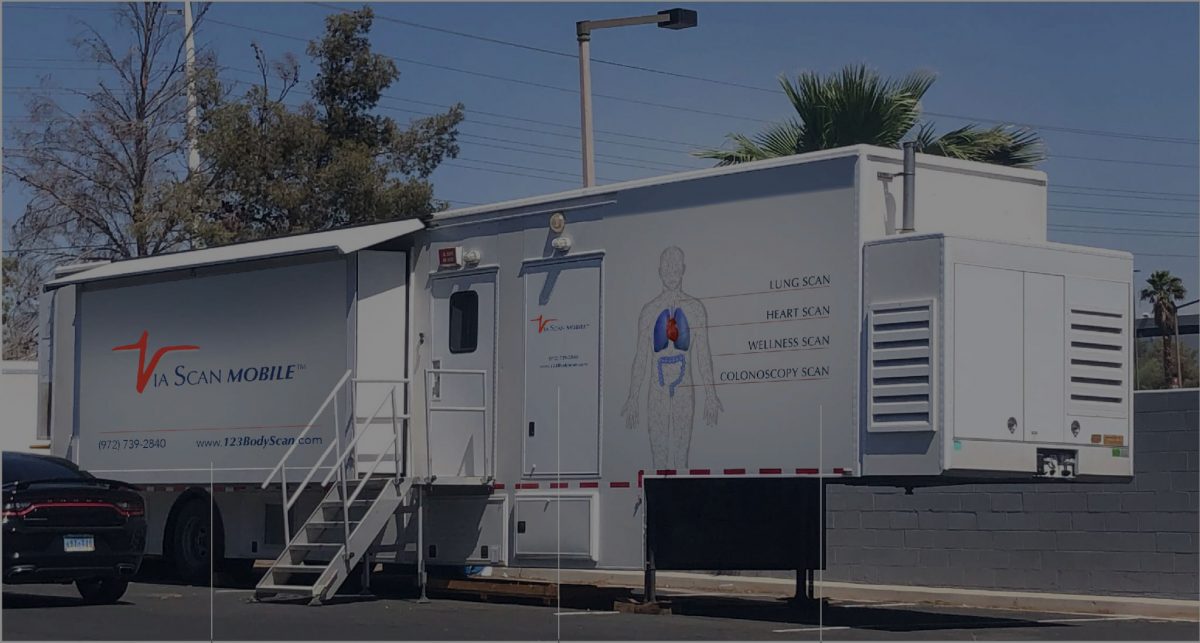
With mobile CT, the scanner travels in a specially equipped vehicle to an agreed location. Specialized vans carry all the equipment required for on-site CT scanning and examinations. Among the advantages of mobile CT scans are:

  • Convenience: the scan takes place at an agreed site, such as a workplace or community location
  • Speed: may reduce the wait for an appointment at a facility, depending on the provider
  • Ease: remains in a familiar setting as opposed to a hospital
  • Flexibility: scheduling may fit around work or other commitments, depending on the provider

But what expenses are involved in providing you with such cutting-edge technology? How much does a CT scan cost?  Let’s dissect it together.

What is the cost of a CT Scan?

The cost of a CT scan varies widely depending on the part of the body scanned, whether contrast is used, the facility, and your insurance. Ask the facility for the total price, including the radiologist’s report, before booking.

  • Computed tomography (CT) scans are a non-invasive, painless diagnostic procedure that provides images of the inside organs.
  • Certain health plans may cover authorized CT scans. You could still be responsible for out-of-pocket expenses like deductibles, copays, and coinsurance.

How much does a CT scan cost with Insurance?

Rigorous network protocols regulate the services that policyholders can access that are covered by healthcare coverage. Although some outside-of-network coverage is offered by insurance providers, using an out-of-network provider may increase your costs. Financial difficulties come when you are saddled with a bill for a CT scan that costs several thousand dollars.

Your health plan will determine the precise cost of the CT scan. Some can pay nothing at all. However, some health plans could have a charge or deductible that you must pay before they would cover the expenses of treatment. Ask your insurance company the following to make sure you get the full benefit coverage:

  • Your health plan covers CT scans and other imaging tests.
  • Any deductibles or copays are your responsibility.
  • It requires prior authorization in advance.

Your health plan allows you to select imaging centers and determine your fees based on the treatment location.

How much is a CT scan without Insurance?

When a CT scan is required but insurance is not, the whole cost of the bill must be paid out of cash. Medical facilities usually bill uninsured patients the entire gross sum instead of the insurance company’s reduced budgeted rates. Prices for the same scan can vary a great deal between providers, so it is worth comparing before you book. If you are uninsured or paying yourself, you have the right to ask for a Good Faith Estimate of the expected cost in writing before your scan. [1]

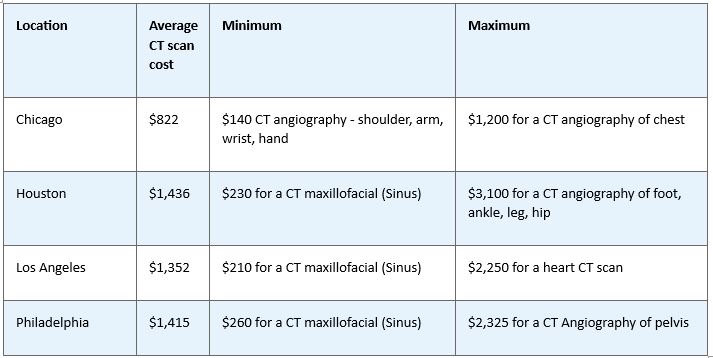
Here are some Average CT scan prices with or without contrast from across the U.S.

CT scan

Despite comparable CT test categories, there is a great deal of variability due to important factors such as the kind of scan, the supplies and instruments used, the personnel involved, and the use of contrast dyes. However, selecting less expensive providers over huge healthcare systems is a chance for cash-paying individuals to reduce those costs significantly. Mobile CT providers are one option worth comparing.

What is a Portable CT Scanner?

A portable or mobile CT scanner is CT equipment that can be brought to the patient’s location for scans. Here are some essential details regarding portable CT scanners:

  • All of the essential components for CT imaging are housed in a dedicated car, trailer, or moving van that safeguards the delicate equipment during transportation, which is how portable CT scanners work.
  • The scanner and its equipment are built to fit inside a vehicle or trailer, so the imaging unit can be taken to the patient’s location instead of the patient travelling to a hospital.
  • The scan itself usually takes only a few minutes, and the images are then reviewed by a radiologist, who sends a report to your doctor.

Modern portable CT scanners’ mobility, precision, and speed make it possible to provide this essential diagnostic imaging equipment to patients directly rather than vice versa. This can improve access to CT scanning when it is clinically needed.

Conclusion

It’s stressful and worrying enough when you or someone you care about needs a CT scan; don’t add to the anxiety by worrying about how to get services and how much the bills will cost. ViaScan of Las Colinas offers mobile CT scanning; contact us for current pricing and availability. We bring mobile CT scanning to agreed locations, such as offices and communities, to make planned scans more convenient. We aim to keep our pricing straightforward, so ask us for a full quote before you book. To get precise rates customized to your needs, contact our scan professionals right now.

References:

[1] Centers for Medicare & Medicaid Services (CMS) — Good Faith Estimates and the Patient-Provider Dispute Resolution Process for Uninsured (or Self-Pay) Individuals. https://www.cms.gov/cciio/resources/regulations-and-guidance/downloads/good-faith-estimate-patient-provider-dispute-resolution-process-for-uninsured-or-self-pay-individuals.pdf