
CT Scan for Kidney Stones
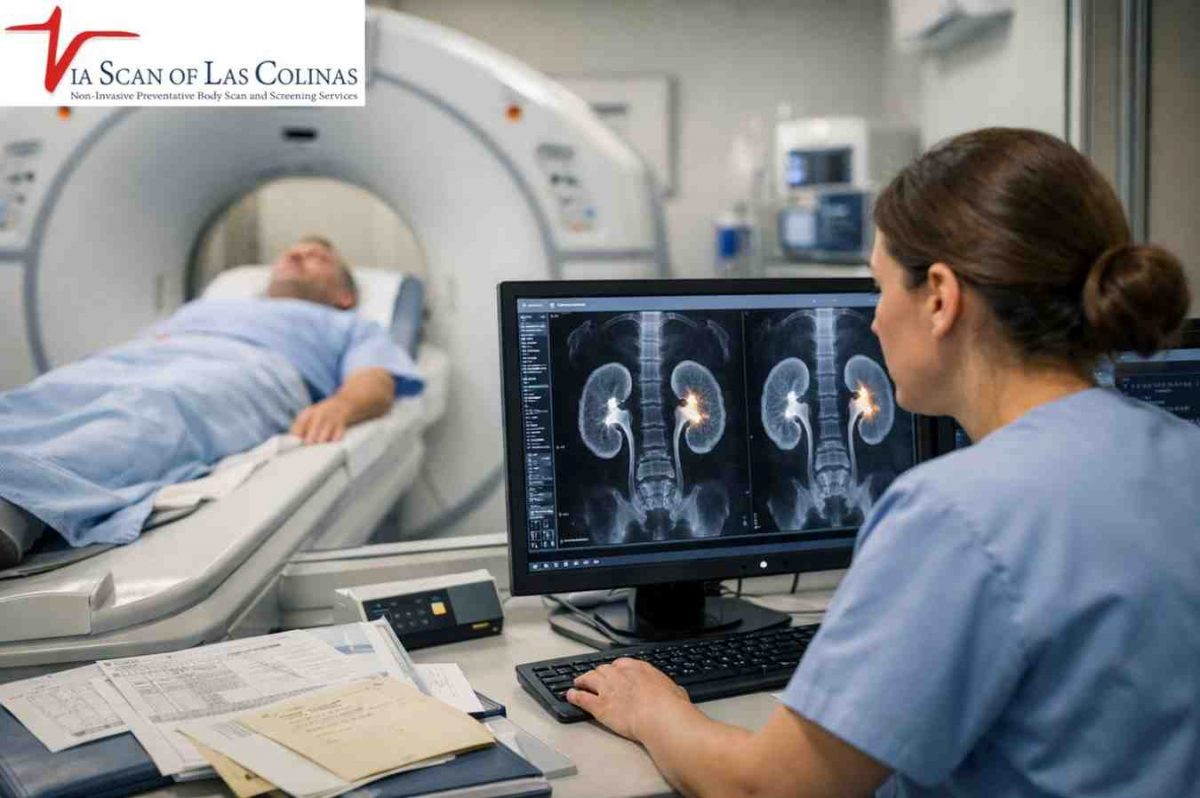

Sudden, intense pain in the back or side is frightening. Kidney stones are one possible cause, particularly when the pain occurs alongside blood in the urine, nausea or painful urination. However, these symptoms can also point to other medical conditions.[2]Knowing the cause helps your doctor choose the right treatment, so once the symptoms of kidney stones are observed, the correct diagnosis is essential. If the pain is severe, or you have a fever, chills or vomiting, get urgent medical care. A CT scan is commonly used to detect kidney stones because it can show their size, location and whether they are blocking the urinary tract.[1]
How Does CT scan diagnose kidney stones?
The CT scans involve the use of special X-rays to produce detailed cross-sectional images of your kidneys, ureters, and bladder. A non-contrast CT scan is commonly used when a healthcare professional suspects kidney stones. [1] The scan can help identify stones and show their size and location. It can also show whether a stone is blocking the flow of urine or causing swelling in the urinary tract.
Symptoms that may lead a healthcare professional to investigate possible kidney stones include: [2]
- Severe pain in the back, side or lower abdomen
- Blood in the urine
- Pain or difficulty when urinating
- Nausea or vomiting
The visual scan helps to identify the size and form of the stones and their location in your urinary tract. Non-contrast CT can detect most types of kidney and ureteral stones and provides useful information about their size, location, and surrounding anatomy.
The CT Imaging Process of Stone Detection
CT technology operates on the principle of capturing various X-ray images from several angles around your body. A computer uses these images to give you detailed cross-sectional images of your internal organs. The presence of kidney stones is evident in a bright white spot when observed on the CT scan, since it is denser than the surrounding tissue. CT imaging can detect small kidney and ureteral stones that may be difficult to identify using other imaging methods. The scan provides images of the urinary tract, helping healthcare professionals assess the location of stones and identify possible urinary blockages or related complications.
CT Scan Vs. Other Imaging Tests for Kidney Stones
- CT scan: Non-contrast CT gives detailed information about the size and location of many kidney and ureteral stones. It can also show signs of blockage and help find other causes of pain. [1]
- Ultrasound: This test uses no ionizing radiation. It can find some kidney stones and signs of urinary blockage, and it is usually preferred as the first imaging test during pregnancy. [1]
- Abdominal X-ray: This can show some stones, but it may miss smaller stones or certain types of stones. [1]
- MRI: MRI is not commonly used as the initial test for kidney stones because CT provides better stone detection. However, MRI is not commonly used as the initial test for kidney stones because CT provides better stone detection. However, MR urography without IV contrast may be considered in selected situations, including pregnancy. [1]
Why is a CT scan the gold standard in the detection of kidney stones?
Non-contrast CT is commonly the preferred imaging test for adults with suspected kidney stones because it provides detailed information about stone size, location and possible urinary blockages. Ultrasound is generally preferred as the initial imaging test during pregnancy. [1] The technology identifies most types of stones, including some that are not detectable in normal X-rays, and their sizes as well. CT scans can also reveal signs of urinary blockage, swelling and other possible causes of abdominal or flank pain. [1] CT is useful in evaluating sudden or severe flank pain because it can quickly provide detailed images of the urinary tract and help identify kidney stones or other possible causes of pain. [1] For scheduled CT scans ordered by your doctor, ViaScan uses CT imaging technology to provide detailed images that are reviewed by qualified radiologists to help assess possible kidney stones in residents of Irving and surrounding areas.
Stone detecting capability and position
- Determines the presence of stones all over the urinary tract, starting with the kidneys and extending to the bladder.
- Detects the size of exact stones, which assists in forecasting whether some stones are going to pass naturally or not.
- Demonstrates the position of the stone as compared to other structures, such as blood vessels.
- Discloses several stones simultaneously that can be in existence.
- Identifies the presence of stones in unusual places that are not detected by other tests.
- Gives 3-dimensional images of a relationship of stones to the surrounding anatomy.
What kind of CT scan will be performed on kidney stones, and do you need contrast?
When kidney stones are suspected, healthcare professionals commonly use a non-contrast CT scan of the abdomen and pelvis. This means no contrast dye is injected into the bloodstream, and the scan can identify stones and show their size and location. [1] Contrast-enhanced CT may be considered when a healthcare professional suspects another condition or needs more information about the abdominal organs, blood vessels or surrounding structures. The choice depends on the clinical question and your medical history, and the healthcare professional and radiology team decide the right imaging protocol.
What Happens During a Non-Contrast CT?
Kidney stone CT is a very effective method, fast, and uncomplicated. The scan is finished in less than 5-10 minutes. The procedure does not need any IV line or injection, thus being entirely painless besides lying down on the scanning table. It is possible to have a normal pre-test meal and drink. None of the medication or special preparation is required
Where Contrast May Be Needed.
- Suspected infection or abscess as well as kidney stones.
- To check blood flow or the kidneys.
- Kidney stone symptoms that do not have a clear cause could be other than stones.
- Evaluation of complicated anatomical differences.
- Previous surgical procedures or anatomical abnormalities that involve advanced imaging.
- Where more diagnostic information would help in making a medical decision.
What should you expect during a CT Scan for kidney stones?
The CT scan to detect kidney stones is typically a short and painless process. Prior to the examination, a technologist may direct you to remove any metallic materials, including jewelry, and put on a hospital gown if required. You will have to lie down on an examination table, usually in a reclining position, which will then slide into the CT scanner. During the process of imaging your abdomen and pelvis area, you will need to remain motionless, and you will be instructed to hold your breath at certain times to avoid blurring of images.
Step-by-Step Scan Process
- Register and sign paperwork forms.
- Undress and put on a medical gown and tie up personal possessions.
- Place your position on the cushioned scanning table.
- The table passes rather slowly through the CT scanner.
- The scanning takes between 5 and 10 minutes.
- Reports are usually available within 24-48 hours.
Conclusion
The proper diagnosis in case of the symptoms of a kidney stone presupposes the selection of high-quality imaging equipment and qualified specialists. If your doctor has asked for a CT scan for suspected kidney stones, call ViaScan of Las Colinas. Imaging is overseen by its Director of Operations, John Duncan, Ph.D., who brings more than 20 years of experience to the role and has spent his career helping thousands of people take a more active part in their health. We have state-of-the-art imaging devices and experienced radiologists who offer the overall examination you require whenever you get positive indications of kidney stones. We also provide complete health scans and preventive scans with the help of a whole body scan.
Sources
[1] RadiologyInfo (Radiological Society of North America and American College of Radiology) — Acute Onset Flank Pain: Suspicion of Stone Disease (Urolithiasis).https://www.radiologyinfo.org/en/info/acs-acute-onset-flank-pain-suspicion-stone-disease
[2] National Institute of Diabetes and Digestive and Kidney Diseases (NIDDK) — Symptoms & Causes of Kidney Stoneshttps://www.niddk.nih.gov/health-information/urologic-diseases/kidney-stones/symptoms-cause