
What is a CT with Contrast?
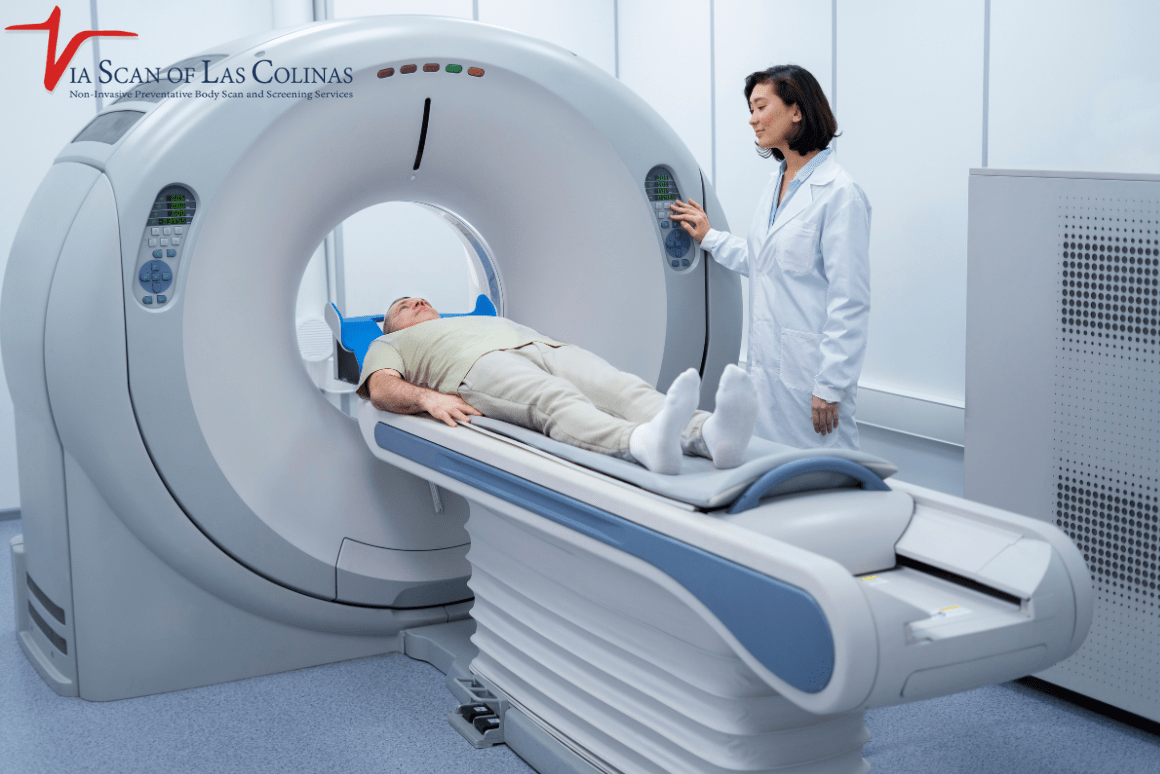

Medical imaging has advanced well beyond mere X-rays, and advanced machines are now available that can ideally view the inside of the body. One of the most beneficial tools for physicians today is the CT scan, which may be performed with contrast when additional detail is needed. Contrast-enhanced CT can help clinicians assess certain organs, blood vessels and tissues. The scan itself is usually quick, but its suitability and risks depend on the patient and the type of examination.
Contrast can make selected structures easier to distinguish than on scans without contrast. ViaScan of Las Colinas provides several imaging services; however, not every scan uses contrast material. We will discuss the special qualities of contrast CT scans and when they may be prescribed to you.
What is a CT scan with contrast, and how is it different from a traditional CT scan?
- Normal CT images are clear in showing bones and certain organs.
- Contrast material works like a highlighter. It does not permanently colour your organs, but it temporarily changes how X-rays pass through blood vessels, organs and tissues, so they stand out more clearly on the images. [1].
- The contrast agent travels through your bloodstream, which helps blood vessels and certain organs and tissues show up more clearly.
- A contrast-enhanced CT can give the doctor extra detail for some questions, but it is not automatically better for every purpose.
What is contrast dye made of, and how does it work?
Iodine-based contrast material is commonly used for CT scans. It functions as a highlighter for your insides. Once injected, the dye spreads in the blood and results in certain tissues appearing brighter in CT images. Iodine absorbs X-rays in a different way to increase the contrast of structures. The dye is filtered out by your kidneys and passed in urine; how quickly this happens varies from person to person and may take longer if kidney function is reduced. The imaging team follows procedures for giving contrast and responding to any side effects or reactions.
When do doctors recommend a CT scan with contrast?
When physicians need to see blood vessels, detect infections, or examine soft tissues more clearly, they may prescribe contrast. A CT scan without contrast already shows bones and some organs well, but contrast helps doctors see problems in soft tissues and blood vessels that would otherwise be difficult to detect.
If your doctor suspects a problem with blood circulation, is looking for tumours, or simply wants to examine the inside of your kidneys, liver, or other organs, they may request a contrast scan. Contrast is often used for detailed scans of the blood vessels, heart, and lungs, but many preventive scans, such as a coronary calcium score, are done without any contrast at all.
What conditions can a CT scan with contrast help detect more clearly?
A CT scan enhanced with contrast can help doctors see certain health issues more clearly than a standard scan.
It can help doctors:
- investigate blood clots, when the right type of CT exam is used,
- assess blood vessels,
- look for signs of infection. CT shows the structure of organs; it does not directly measure how well they function.
Contrast can help doctors identify obstructions in your blood vessels or veins, as well as issues with your kidneys, liver, or how blood circulates to various body parts. Contrast scans are usually ordered by a doctor to investigate a specific problem. Separately, ViaScan offers preventive wellness scans for people without symptoms, and your doctor can help decide whether a contrast scan is ever needed as part of your care.
Is a CT scan with contrast safe?
A contrast-enhanced CT scan procedure is safely performed on most people, but your doctor will review your medical history first. Before your scan, tell your doctor if you have had a reaction to contrast before, have allergies to food, drugs, or other substances, or have heart disease, diabetes, kidney disease, or thyroid problems, because these can affect how your scan is planned. [1]
If you are or might be pregnant, always tell your doctor or technologist first; iodine-based CT contrast is not known to pose a significant risk to mother or baby, but your radiologist can explain the risks and benefits. [1].
Where can I get my health scanning done?
At ViaScan, we do not just take pictures. We provide imaging services, including heart scan, lung scan, and wellness body scans. Our standard heart and body scans do not use contrast dye, so contact us to confirm whether a specific contrast-enhanced CT is available. Scanning can help patients stay informed about their health, with follow-up from a qualified healthcare professional.
Conclusion
Knowing what a contrast-enhanced CT scan involves can remove some of the mystery and anxiety that are sometimes associated with medical practice. Such scans are an effective tool that enables the doctor to have an amazing view of the inside of your body with high clarity and detail. The contrast enhancement introduces important data for proper diagnosis and treatment planning.
The power is in knowledge as far as your health is concerned. As an active participant in your healthcare choices, you learn about procedures such as contrast-enhanced CT scans. The professional staff of ViaScan of Las Colinas is ready to clarify any questions and help you feel at ease throughout the process.
References:
[1] RadiologyInfo (Radiological Society of North America and American College of Radiology) — Contrast Materials.https://www.radiologyinfo.org/en/info/safety-contrast