
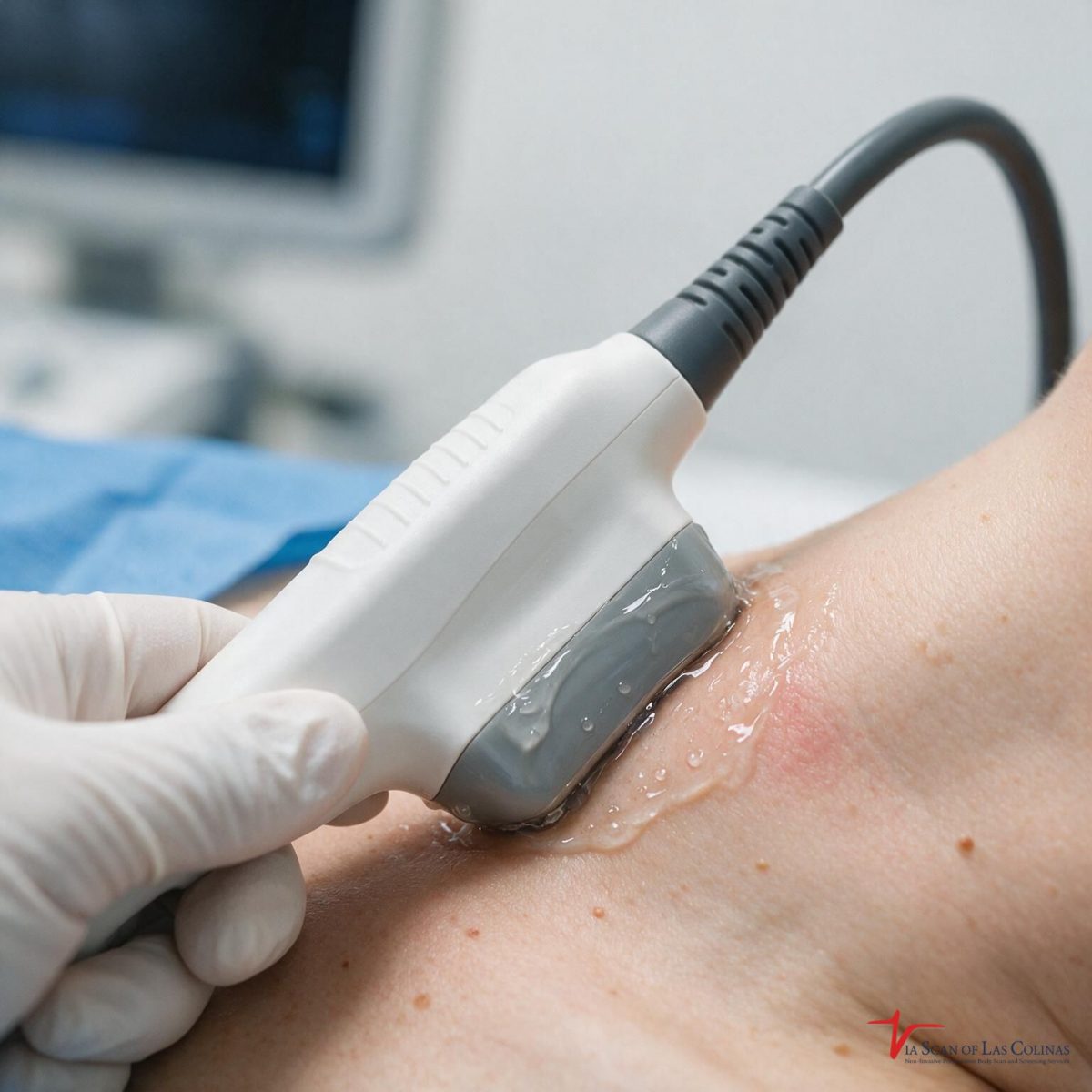

If a neck lump does not go away within the first 2 to 4 weeks, it is a good time to consider medical imaging to evaluate the lump and always sooner rather than later. If you’ve seen a lump on the side of your neck, felt something at the back or had trouble with swallowing and swelling, it’s important to know what’s going on. Neck lumps can be caused by a variety of things, some of which may be harmless, but others will require immediate attention imaging is one of the best ways to distinguish the differences quickly.
What are Neck Lumps and Common Causes of Lumps or Swelling in the Neck?
Neck lumps are any abnormal swelling or mass that is felt or seen in the neck area. Knowing the answer to the question of why does a lump appear in the neck begins with an understanding of the many structures within that small space, which can give rise to a lump for quite different reasons: lymph nodes, salivary glands, thyroid tissue, muscles and blood vessels.
Lymph Nodes, Cysts, Thyroid Nodules, and Other Causes
- A swollen lymph node is the most common cause of a lump on the side of the neck and is usually a reaction to an infection, usually from a cold, strep throat, or dental abscess, that clears up when the infection is gone.
- Thyroid nodules are growths in the thyroid tissue on the front of the neck—usually they are benign, but sometimes they need imaging and labwork to determine the significance or nature of the nodule.
- A cyst, such as a sebaceous or branchial cleft cyst, is a non-cancerous fluid-filled sac that can form anywhere in the neck, at any age, and is usually soft, movable and grows gradually without causing much pain.
- Neck swelling can also be caused by benign conditions such as lipomas and salivary gland enlargement, although sometimes the appearance of these masses can be mistaken for more serious conditions that need to be clinically assessed by a professional.
When should a neck lump be investigated with medical imaging?
The best question anyone with neck swelling can ask themselves is when to worry about a neck lump. Not all lumps need to be immediately studied by imaging — some traits make professional evaluation truly time sensitive.
Warning signs and factors that may indicate further testing are warranted.
- A lump that has existed for more than 2-4 weeks and in which imaging and evaluation are warranted, especially if there has not been a recent illness, is a consistent clinical presentation that imaging and evaluation should be performed without delay.
- A lump on the back of neck or side of neck that is hard, fixed, or is a growing lump is worrying rather than a soft, movable lump imaging can characterize a lump far more precisely than physical exam.
- Any neck lump causing difficulty in swallowing, hoarseness, unexplained weight loss or night sweats with swelling significantly increases the clinical concern and warrants immediate medical and imaging work up.
- Pattern of neck lump cancer symptoms in adults over 40, a persistent, firm enlargement without pain, especially if the person has a history of smoking or drinking — is always suspicious and should be carefully evaluated with imaging studies.
Which Imaging Tests Are Used To Evaluate Neck Lumps?
There are several ways to assess a neck lump and the most appropriate one will depend on what is suspected to be the cause of the lump, where the lump is located and how much additional information is required apart from what is found on physical examination.
How Ultrasound compares to CT Scans and MRI.
The first imaging test used for a lump on the side of the neck is usually ultrasound, which is quick, gives no radiation, and can be used to help determine the characteristics of lymph nodes and distinguish solid masses from fluid-filled cysts.
- When cancer symptoms are suspected in a neck lump and the involvement is suspected to be deep, CT scans can give detailed cross-sectional imaging—very useful for this purpose.
- MRI is excellent for soft tissues, does not use radiation and is preferred in the imaging of deeper neck compartments and salivary glands where high resolution differentiation of tissues is important.
- PET-CT may be performed when malignancy is suspected, to find out if the tissue is growing and for better detection of any other areas of involvement than the main lump.
How Can Medical Imaging Help Detect Potentially Serious Neck Conditions Early?
Medical imaging can detect serious neck problems early because it shows abnormalities that cannot be seen on a physical exam, such as small, deep masses, early thyroid changes, and enlarged lymph nodes that don’t yet cause surface swelling. Imaging data adds to the clinical picture to make decisions about when to be concerned about a neck lump clearer. Early imaging is a valuable tool for persistent or concerning swelling, as there is often a definitive answer as to what is causing a lump in the neck.
If you prefer to see things in detail and from an anticipatory perspective, ViaScan of Las Colinas provides non-invasive CT scans and whole-body scans that scan multiple regions of the body at once. A whole-body scan can detect abnormal findings in the neck along with other internal abnormalities, aiding in early, informed discussions with your health care provider. If you have a neck lump and are having trouble swallowing or have a lump on the back of your neck – talk to a licensed professional before adding preventive imaging to your health plan.
Choose Our Wellness Body Scan
Early Detection Saves Lives!
-
- Accurate
- Quick Result
- Affordable

Conclusion
Neck lumps occur regularly and are generally non-cancerous but if the lump is persistent or accompanied by symptoms, it is important to seek professional advice as soon as possible. ViaScan of Las Colinas provides professional CT scan and whole body scan services to people with a proactive approach towards health awareness, knowing early is better than knowing later. Seek professional assistance early; early assessment always results in better outcomes.