
What Causes Blood Clots in Lungs? Causes, Risk Factors & Warning Signs
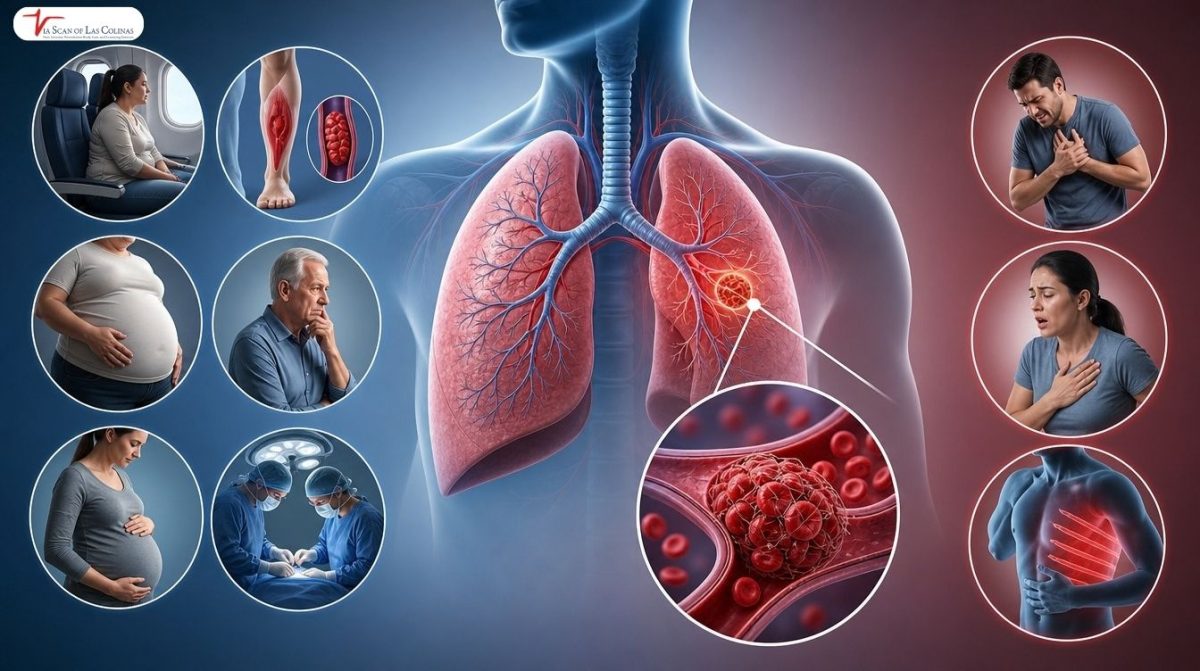

A lung clot usually comes from another place in the body. Most times, it begins in a leg. A clot can move along in the bloodstream. It may then lodge in an artery that supplies the lung. Doctors refer to this as a pulmonary embolism.
Learning that term can feel scary right away. Still, the situation has a fairly straightforward sequence. If you understand the basic steps ahead of time, you may spot the warning signs earlier. It may also make it less confusing, since many people have never heard the condition name. Take a minute to review it. Once you do, it tends to make more sense. We can walk through it in small parts. I will keep it plain so it is easier to follow.
What causes blood clots to form in the lungs?
Most pulmonary blood clots are from a blood clot that forms in a vein (typically the leg) and lodges in the lungs. This can happen as a result of prolonged sitting, some injuries and some health conditions. This is known as a pulmonary embolism, and understanding the causes of a PE can help you better understand your health.
Common causes for blood clots in lungs:
- Spending extended periods of time seated for long trips or flights
- Surgery or injury in the last few days or weeks.
- Rest of extended periods.
- Some blood clotting problems
- Walls of a blood vessel becoming damaged
What are the Health Conditions and Lifestyle Factors that Raise the Risk of Lung Blood Clots?
Some medical problems and lifestyle factors increase the risk of a lung blood clot, such as certain illnesses and lifestyle choices. Understanding these risk factors will help you be ready and proactive in prevention. There are no single factors that ensure that a clot will form, but it is helpful to know them to help plan for them when you speak with your health care team if more than one risk factor applies to you.
Risk Factors for Blood Clots
- Using tobacco products or smoking.
- Having excess weight and/or lack of movement.
- Some cancers or heart diseases
- Medications for pregnancy or hormones
- Family history of blood clots.
What are the early warnings of a lung blood clot?
Signs of a pulmonary embolism may be shortness of breath, chest pain or rapid heart rate. Knowing about these symptoms of blood clot in the lungs ahead of time is helpful as they can develop suddenly. If one or more of these symptoms appears suddenly, it is important to get medical help as soon as possible, before the symptoms pass.
A lung blood clot may have the following symptoms:
- Rapid onset of breathlessness (difficulty breathing)
- Difficulty breathing and pain while breathing
- Abnormally high or low heart rate.
- Coughing, occasionally with blood
- Feeling lightheaded or dizzy
How Does a Blood Clot End up in the Lungs?
Often the question arises: if and how fast does a blood clot travel from the leg to the lungs? The clot develops in a leg vein, detaches, and moves through the bloodstream until it gets trapped in the lungs, blocking the flow of blood. This process can be rapid, hence the importance of immediate response to sudden symptoms.
How Pulmonary Embolism Develops
It occurs when a fragment of the clot separates and travels through the veins to the heart, where it becomes trapped in a lung artery and blocks normal blood flow. An angiogram can detect an embolism. What is a CT angiogram, and how does it help identify anomalies early?
Screening and Imaging Support
Your doctor may use imaging equipment to look more closely if he or she suspects a blood clot in the lungs. The CT scan or CT pulmonary angiography, also known as a computed tomography (CT) scan for lungs, could produce more detailed images of lung blood vessels, allowing doctors to have more information to work with. For individuals who wish to have additional information, along with their physician, to help clarify whether they have a risk for pulmonary embolism, there are a number of imaging choices available, including pulmonary embolism screening. This type of scan is available at centers such as ViaScan of Las Colinas and is done in conjunction with, not as a replacement for, your physician’s care and not as a diagnostic tool in and of itself.
In addition to this, ViaScan also conducts heart scans, whole-body scans, and general CT scans, providing individuals with even more ways to keep up with their overall health. A heart scan examines the heart and surrounding blood vessels, and a whole-body scan provides a comprehensive overview of multiple areas in a single scan. These scans are not used to diagnose or treat any diseases, but rather are used to help you and your licensed health care provider explore your health together and in the context of all of your other health concerns.
Choose Our Preventive Lung Scan
Early Detection Saves Lives!
-
- Accurate
- Quick Result
- Affordable
Conclusion
Blood clots can end up in the lungs because the clot often starts somewhere else. After that, it moves through the bloodstream and lodges in the lung vessels. This can happen if clotting is more likely. Common triggers include recent surgery, sitting or lying in the same spot for many hours, and having certain health issues. Spotting the warning signs sooner matters. Getting help fast can make a big difference. To ensure you and your doctor are better informed and can make decisions as a team, ViaScan of Las Colinas provides supportive imaging services such as CT scans.