How-much-does-an-MRI-cost-without-insurance.png
20/Jul/2026

A non-insured MRI scan can range from $400 to $3,500, depending on the part of the body being scanned, the type of MRI you need, and whether you require contrast dye. Understanding how these factors affect the price of an MRI can help you make the smartest, most cost-efficient choice. One of the most flexible, cost-sensitive aspects of healthcare is medical imaging, and oftentimes, uninsured patients with no knowledge of how to ask for a self-pay price end up paying much more than what they should. This blog explains the average MRI scan cost, how they can be influenced by the price and what options are available for those who are paying it out of their own pocket.

What is the cost of an MRI scan without Insurance?

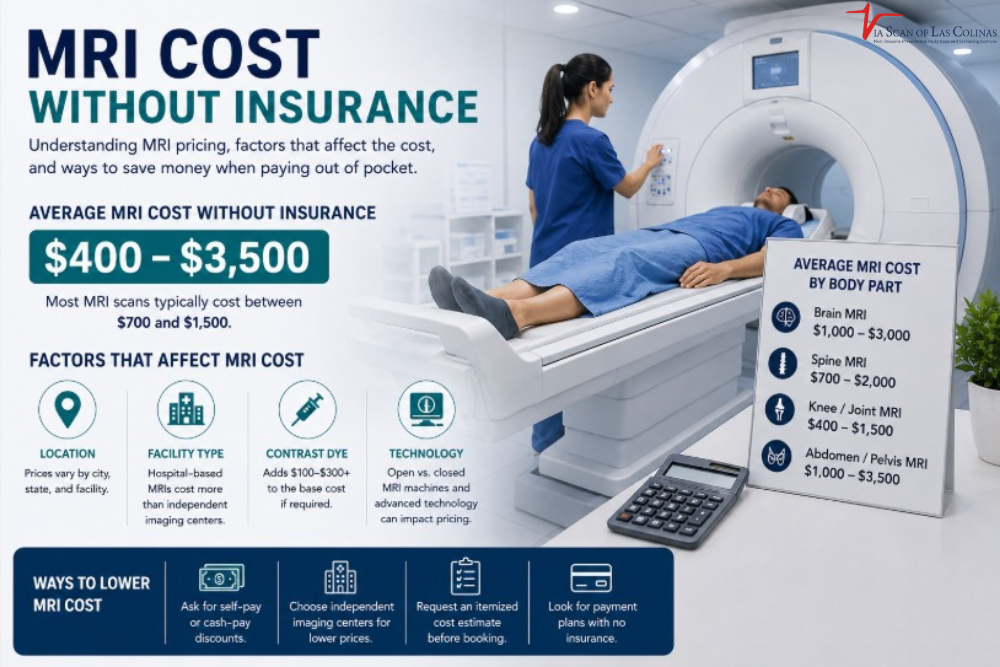
Without insurance, the average MRI scan ranges from $400 to $3,500; most MRI scans at typical MRI facilities cost between $700 and $1,500. Independent imaging centers or radiology practices will often be much cheaper than hospital imaging centers for the same imaging procedure. One of the largest cost factors is the body part being scanned, with the cost of an MRI of the brain being different from an MRI of the spine or abdomen, even on the same machine at the same facility.

Average costs for each type of scan.

Costs of the average MRI scan vary greatly depending on the area of the body being scanned. The standard price tag of a brain MRI is $1,000 to $3,000 on the hospital machine. Spine MRIs run $700 to $2,000. MRIs for knees and joints tend to be less expensive, anywhere from $400 to $1,500. MRIs of the abdomen and pelvis are often one of the more expensive types of MRIs because of the complexity of imaging and the longer time that they take.

What are the factors that Impact the price of an MRI without insurance?

There are a number of factors that contribute to the price of an MRI beyond the part of the body being scanned. By knowing these variables, uninsured patients can better inform themselves and ask the appropriate questions before making a decision on where to go or when to have a scan.

Location, Facility, Contrast Dye, and Technology.

  • The largest cost driver is where the MRI is located: Hospital-based MRI scanners consistently cost 2 to 3 times more than independent outpatient imaging centers — even for the same MRI technology and the same radiologist interpreting the images.
  • Location plays a big role in pricing — the MRI cost in high-cost-of-living states and larger metros is likely to be more expensive than the same MRI in smaller markets and in rural MRI facilities with lower overhead.
  • The cost of certain conditions, including contrast dye, which is injected into the bloodstream to make the scan more clearly visible, is another $100-$300 or more that adds to the base cost of the scan, and depending on what the doctor wishes to determine, not all MRIs will require the addition of contrast dye.
  • The distinction between open and closed MRI machines is also related to price, because some open machines are wider and less claustrophobic, and may be less available causing this to increase the price; and high-field closed machines at academic centers may be more costly because of the advanced technology and the longer scan time.

How can they lower the price of an MRI for Patients who don’t have insurance?

There are more answers to this question than you might think  and the price of the same scan can vary significantly depending on the right questions asked at the beginning.

Self Pay Discounts, Payment Plans and Imaging Centers

  • Be sure to request self-pay or cash-pay pricing before scheduling an appointment; many facilities will provide a discount to uninsured patients that pay at the time of service as opposed to through an insurance company, sometimes 30% to 50% off the “standard” price.
  • Avoid hospitals — the most convenient place to begin looking for MRI payment plans with no insurance options is with independent imaging centers, who have been known to consistently provide the lowest prices for the same diagnostic quality as any hospital.
  • Ask for an itemized cost estimate in writing prior to appointment, to prevent surprise billing and provide a comparison of costs and dates of scans before choosing a facility and date.
  • There are plenty of MRI payment plans that do not require any insurance. Many imaging centers and hospitals have interest free or low interest payment plans that patients with no insurance can use to pay for the total expense over several months without having to pay it at once when he or she receives services.

Should an MRI always be done; are there other Imaging Tests that can be done?

An MRI doesn’t necessarily have to be the first or only test that is considered  and in many cases, another test can provide the same diagnostic information for a much lower cost. Comparing the cost of a diagnostic test may assist patients and providers in making the best decision for the clinical situation.

In cases where CT Scans, X-Rays, and Ultrasounds may be recommended.

  • Diagnostic test cost comparison revealed that CT scans usually cost less than MRIs, and are often the preferred option for bone injuries, conditions of the chest, and abdominal emergencies. 
  • The least expensive first line of examination of bones and lungs is x-ray. 
  • Ultrasound is an economical method for the assessment of soft tissue and organs. 
  • MRI is still the imaging modality of choice for detailed evaluation of soft tissue of the brain, spine and joints where other modalities are inadequate.

For anyone seeking any option for non-emergency imaging services, ViaScan of Las Colinas has a variety of non-invasive preventive imaging options available, including CT scans, whole-body scans and bone density scans, all offering meaningful health visibility beyond the walls of a traditional hospital. These services can be provided to those who are interested in understanding their health condition before it happens and are especially relevant to those who are responsible for out-of-pocket imaging costs and don’t have coverage from their insurance. 

Choose Our Full Body Scan

Early Detection Saves Lives!

    • Accurate
    • Quick Result
    • Affordable

Image

Conclusion

While MRI price without insurance may seem unavoidable, there are ways to find a price that’s within reach and to get an estimate before heading to the doctor. The average MRI scan cost is much higher than many people realize, but there are ways to make the procedure more accessible, such as independent imaging centers, self-pay discounts, and MRI payment plans with no insurance. Don’t simply settle for the most expensive facility in the vicinity; seek professional advice on which test is appropriate in their case, and discuss all options before doing so. Consider visiting ViaScan, a dedicated preventive imaging center, for a scan or imaging services because they are sometimes more affordable than alternative imaging types performed at a hospital, at least on the front end.


age-for-woman-to-get-a-bone-density-test.jpg
13/Jul/2026

Women should get a bone density test around age 65, but for some women it’s smart to look at screening earlier maybe much earlier, if there are specific risk factors. Bone loss tends to move along quietly, like it’s happening in the background, and most of the time a person is not aware of it, or it doesn’t cause any obvious discomfort. It can also go unnoticed until a fracture shows up, which is why it matters to understand the recommended age for getting a bone density screening in the first place. From nearing menopause to family history of osteoporosis to taking an active role in your long-term health, this blog provides straightforward answers on testing and why it really matters.

What is a Bone Density Test and How Does it Work?

A bone density test is an imaging scan that uses an X-ray or other type of scan to measure the amount of minerals in your bones, most often done by a DEXA scan. The first step of the question, when should I get a DEXA scan? is to understand what it measures and how simple it is to get for the patient themselves.

What can a Bone Density test detect?

A bone density test provides measurable, actionable information for both the patient and their health care provider about bone health that is not available from a physical examination alone, and can detect osteopenia, osteoporosis and fracture risk. Having a DEXA scan is only half the story: knowing what it shows is just as essential.

Diagnosing Osteopenia, Osteoporosis and Fracture Risk

  • If a T score is between -1.0 and -2.5, this means that the bone density is lower than it is in healthy individuals and there is a higher risk of developing the condition; however, it doesn’t necessarily mean that it will be more severe with time.
  • A T score < -2.5 is considered osteoporosis, a substantial loss of bone that greatly increases the risk of fracture and should be discussed with a physician as part of a comprehensive clinical evaluation.
  • Whole body bone loss screening using a DEXA scan is useful to provide a baseline measurement, which can be used to monitor bone density changes over time; repeat screening is therefore a useful tool in the management of fracture prevention screening in women at risk of bone loss.
  • For lightweight women, low body weight bone health concerns are directly measurable using DEXA scanning – providing them with a real measurement of their bone mineral density, not just an estimated risk based on body weight alone.

A bone density scan and whole-body scan are two of the non-invasive, preventive imaging services offered at ViaScan of Las Colinas, which is intended for women who would like to determine the status of their bones before symptoms or fractures begin. These services are designed to help you have these conversations with your healthcare provider in an informed and proactive way, not in place of medical services. Seek professional assistance, begin the conversation early, and give your long-term health the visibility it deserves, with preventive imaging.

What age should a woman get a bone density test?

Women should start to get bone density tests at the age of 65. The recommendations of the major medical organizations for women at average risk is the standard. The recommended age for bone density screening is between 65 and 69 years, due to the increased rate of bone loss after menopause, and because at this age there is increased risk of osteoporosis and fracture that is clinically significant enough to recommend routine screening without symptoms.

General Screening Recommendations by Age:

For women of average risk, the standard guidelines for bone density screening are that it should start at age 65. Postmenopausal women younger than 65 who have one or more risk factors might need to be tested sooner. Fracture history is a powerful predictor of future bone fragility and injury risk, and women who have had a low-impact fracture should be screened as soon as possible, irrespective of age.

Which Women Should Have a Bone Density Test Before Age 65?

Bone density testing may be recommended for women before 65 with certain risk factors. Earlier screening enables identification of bone loss at a time when it can be monitored and managed more proactively, creating fracture prevention screening as a practical tool, not a reactive one.

There are other risk factors that might lead to earlier screening.

  • Women who go into menopause early (before age 45) should undergo bone loss screening because the longer they wait for routine screening age, the longer they have to wait for the accelerated bone loss to return to normal.
  • Low body weight bone health is a known risk factor — and women with a BMI less than 21 or body weight less than 127 should be screened earlier in the course of the disease, where other risk factors are also present.
  • A history of fracture from minor trauma, a family history of hip fracture, use of corticosteroid medications for a prolonged period of time, rheumatoid arthritis, or celiac disease are all factors that can help justify earlier bone density testing than the typical screening age.
  • In addition to the other modifiable risk factors, smoking, excessive alcohol consumption, and the duration of vitamin D or calcium deficiency may signal a healthcare provider to consider fracture prevention screening earlier in the life of a particular individual.

Knowing the DEXA Scan Procedure:

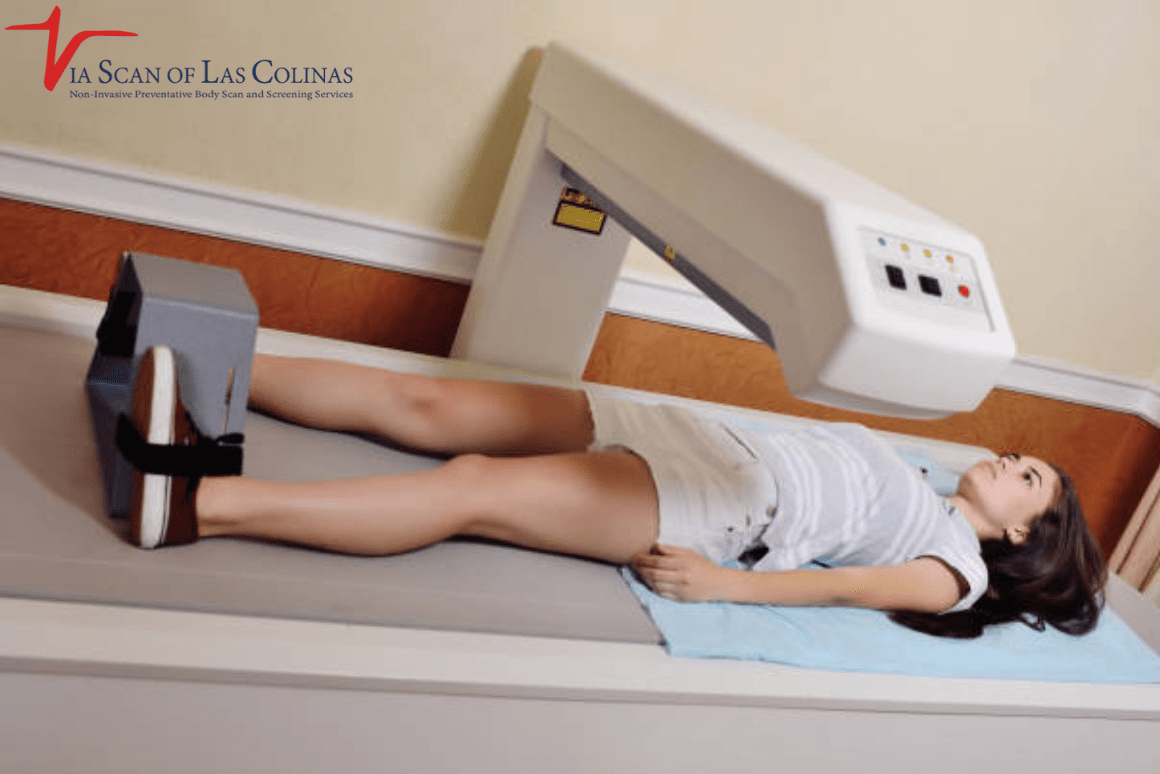
DEXA is a Dual-Energy X-ray Absorptiometry scan which employs two low-dose X-ray beams to assess bone mineral density at specific locations, usually the hip and spine. The scan takes only a few minutes, is pain-free and does not involve an injection or preparation. The results are expressed as a T-score compared with a healthy young adult, to determine if the bone is normal, osteopenia or osteoporosis.

Choose Our Bone Density Scan

Early Detection Saves Lives !

    • Accurate
    • Quick Result
    • Affordable

Image

Conclusion

Bone density testing is one of the simplest and most important preventive measures for women, especially after menopause or if there are known risk factors. The suggested age for bone density screening is 65 for most women, but for women with increased risk, it should be screened at an earlier age. Las Colinas-based ViaScan offers professional bone density and whole-body scanning services, helping to deliver the proactive health awareness that every woman should have.


DEXA-Scan-Show-Cancer.webp
08/Sep/2025

Even as we pay so much attention to our vital organs, such as the heart and lungs, we should pay attention to our bones, which keep our vital organs safe and secure. The fact is that your bones are literally the tough support of your whole body, a crucial yet often overlooked aspect of your health that most people only notice when something hurts or breaks. 

As a medical practitioner who works with these scans daily, I am here to clarify any misconceptions about what DEXA scans are. They do a great job of determining how strong your bones are, but they do not make good cancer detectors. Treat them as experts – actually, very good at a single task, but not made to do it all.

I will also explain what your bone density test can tell you, why it cannot detect cancer, and what additional tests you may need to consider if you are particularly concerned about cancer. 

Does a DEXA scan detect bone cancer?

No, a DEXA scan is not able to detect cancer in the bones. DEXA scans use incredibly low X-rays that are so weak they can’t penetrate the bones, yet are just strong enough to determine their thickness and density.

Doctors require a lot more powerful equipment that can literally peep inside your bones and detect anything strange or abnormal when they must search for bone cancer. It is the difference between flashing a light against a wall and using a strong spotlight to see everything clearly. If you are concerned about bone cancer, your doctor may recommend additional examinations, such as CT scans or MRI, to capture images in a more detailed and clearer manner.

What medical issues would a DEXA test help show?

In addition to osteoporosis (which means weak bones), a bone density test can identify osteopenia – that is, when your bones are already beginning to become weaker but not yet weak enough. It is a yellow light before the red danger light kicks in. Doctors can also use the test to determine whether you break easily, which can be very useful when it comes to planning your care.

 DEXA scans have very limited visibility. They are not able to detect heart problems, lung problems and most cancers. It’s like owning a torch, but it only highlights a small part of a large room. You should consider various types of tests to examine your body and identify any potential health issues thoroughly. ViaScan offers wellness body scans and CT scans, including health preventative scans that can scan your heart scan, lungs scan, and other organs simultaneously.

Can cancer appear as low bone density?

Cancer will not present itself as a weak bone on your scan, but here is what may happen: treatments such as chemotherapy and radiation used to treat cancer may cause your bones to weaken in real life. The actual bone loss will be registered in your bone density test; this test is not misleading, as it tells you the truth.

In some cases, when cancer spreads to bones, it may cause some of the parts to be more dense or less dense than normal. Once again, the DEXA scan is not confused; it simply reflects the actual changes occurring to your bones due to the cancer or the treatment course. That is why patients undergoing cancer treatment may require periodic bone density examinations to monitor their bones.

Where should I get my DEXA or bone density scan from?

ViaScan is great for bone density testing because we have modern machines, which provide you with reliable results. The difference is that we do not simply run one test and say goodbye. We understand that everything in your body is interconnected – bones, heart, lungs, and all the rest are team players.

So, when you visit us for a bone density test and start thinking about other health issues, we handle that. Our wellness body scans, or CT scans, can scan several items simultaneously, which not only saves you time but also provides you with genuine peace of mind. Rather than visiting multiple locations to obtain various tests, you can gain a comprehensive understanding of your health in a single visit. We understand that being healthy means not only checking one item but also knowing your entire body and identifying issues before they become extremely difficult to manage.

Choose Our Bone Scan

Early Detection Saves Lives !

    • Accurate
    • Quick Result
    • Affordable

Image

Conclusion

The bottom line is that DEXA scans are an excellent tool for assessing bone health and helping doctors diagnose osteoporosis. Still, they can never tell you whether you have cancer or not. If you are concerned about cancer, you don’t need to suspect that your DEXA scan will detect it. Rather, have an eye-opening conversation with your physician about alternative scans, such as CT scans, that are literally constructed to identify those issues. 

We believe in transparency at ViaScan, and we want to ensure you understand the capabilities and limitations of each test. This way, you can choose the exact test that will help screen your specific health concern, which is keeping you up at night. Through ViaScan, you possess the instruments and expertise to provide you with definite and trustworthy responses. Get on track with your health by getting the right tests when you need them. We can then have our team create a personalised plan to help you feel good in the years to come.


Bone-Scans-Show-Cancer.jpg
22/Nov/2023

While finding abnormalities in medical testing might be unsettling, identifying problems early is crucial to the successful treatment of many illnesses, including cancer. Naturally, more imaging tests are ordered to establish a diagnosis when anomalies on bone scans reveal issues such as malignancies. However, in identifying possible indications of bone cancer, what may specific nuclear imaging and CT scans at reliable diagnostic facilities like ViaScans reveal? During bone density examinations focused on health rather than disease, knowing how to interpret test findings can help reduce ambiguity about the results.

Although the primary purpose of conduction scans to assess bone mineral levels is to identify osteoporosis, we occasionally find suspicious hot patches that might indicate cancer. Most individuals anticipate evaluations of their bone strength rather than cancer discoveries. Therefore, uncertainty over the scope of these investigations and the next steps to take if suspicious behavior occurs frequently arises when faced with unexpectedly uncertain outcomes. We will elucidate the capabilities and limits of the scans used to assess bone health, looking for cancers.

What is a Bone Density scan?

A bone scan is used to identify a wide range of illnesses and issues related to the bones. A radioactive tracer is used in small amounts throughout the process to highlight potential bone injury in locations where the body has absorbed too much or too little. During your diagnostic testing, your doctor could do a bone scan to rule out the possibility that the bone deterioration is related to cancer.

When cancer is suspected, a bone scan can be very useful because it can detect bone metastases, or cancer that has spread from another region of the body to the bones, as well as primary cancer, or cancer that originated in the bones. Bone metastases can occur from a variety of malignancies, including lymphoma, lung cancer, and breast cancer. Additionally, a bone scan can detect abnormalities in your bones far earlier than a standard x-ray would.

What Does Cancer Look Like on a Bone Scan?

Increased blood flow and bone development are common immune responses from cancerous tumors. Therefore, malignancies typically appear as concentrated or abnormally bright patches on a bone scan, sometimes known as “hot spots.” The cancer’s severity is then determined by its location.

For instance, in areas where tumors frequently form, such as the long bones of limbs, bone cancer may manifest as a solitary hot spot. Metastasizing of bones is a common occurrence for some malignancies, such as prostate and breast cancer. They show many dispersed heat spots throughout the bones. Nevertheless, comparable patterns can also result from non-cancerous illnesses. Therefore, the major use of bone scans is to screen for malignancy. Other imaging procedures, including biopsies and CT scans, verify the diagnosis.

How is Bone Cancer detected?

Numerous tests and instruments are used by a multidisciplinary team of specialists in bone cancer to diagnose the illness, assess it, identify the damaged bone or bones, and create a personalized treatment plan.

Tests to detect Bone Cancer include:

  • Bone Biopsy
  • Bone Scans
  • X-rays
  • CT Scans

What is the Best Scan to Detect Bone Cancer?

Bone Scan

1. Bone Scan: A nuclear medicine exam that covers the whole skeleton and effectively screens for lesions using radioactive tracers. It is incredibly sensitive, but it doesn’t include a lot of cancer-specific information.

  1. CT scan: Creates three-dimensional cross-sectional pictures of bones using computers and X-rays. Improved tumor visualization and tissue invasion detection.
  2. Bone Density Scan:  calculates the density of bones. The findings of a  Bone Density Scan can give important information regarding your risk of fractures and osteoporosis (bone loss). Your body composition, including your muscle mass and body fat, may also be measured with this test.

Can a Bone Density Scan Show Cancer?

A low-radiation X-ray examination known as a Bone Density Scan, or bone density test, quantifies bone mineral density to identify osteoporosis. It looks at common fracture locations like the spine and hips.

Bone cancer cannot be evaluated using Bone Density Scan. However, very infrequently, it could happen to notice odd alterations that might point to cancer. For example, a single dense bone growth or an unexplained localized increase in density. Cancer cannot be ruled out or proven without more testing. To thoroughly screen for tumors, the doctor would probably request more sensitive bone scans, CT scans, or biopsies if any questionable areas are seen.

What other purposes do medical professionals employ Bone Density Scans?

Medical professionals can also order a Bone Density  Scan to:

  • Monitor changes in bone health throughout time.
  • Keep an eye on how your treatment—such as an osteoporosis medication is doing.
  • Analyze your body’s composition, including muscle and fat.

Does a Bone Density Test Show Cancer?

A Bone Density Scan (dual-energy X-ray absorptiometry) or bone density scan uses low-dose X-rays to determine your bone mass. Conventional bone density evaluations using Bone Density Scan don’t look for malignancy. Their use is restricted to determining the mineral concentrations in bone to identify weakening conditions such as osteoporosis. To compare bone strength at high-risk fracture sites, they mostly take pictures. However, physicians may investigate malignancies further if patients have symptoms like localized bone pain and osteopenia on scans. Additionally, baselines for calculating malignancy risk in routine follow-ups for early detection can be established using Bone Density Scan findings.

When Should You Opt for a Bone Scan?

See a doctor about having a bone scan if you have ongoing or increasing bone pain, especially if you’re older and suffering bone pain. Backaches and limb discomfort that don’t go away or interfere with sleep or activities should be checked out. A bone scan can identify:

  • Potential fracture
  • Effects of medications, age, or illness
  • Tumors spreading into the bones.
  • Bone infection
  • Develepment problems in kids

If you are at high risk, schedule routine exams and practice healthy lifestyle behaviors to be on the lookout for bone health issues. This makes it possible to identify problems early and handle them effectively.

Choose Our Bone Scan

Early Detection Saves Lives !

    • Accurate
    • Quick Result
    • Affordable

Image

Conclusion

Although bone scans can identify early indicators of potential bone cancer, further testing is required to confirm the diagnosis. They offer cost-effective and efficient whole-body imaging to pinpoint problem regions. However, the existence and spread of malignant bone tumors can be more accurately determined by CT scans or by biopsy data. Bone scans are widely sensitive, making up for their lack of specificity. They provide the first cues that something is wrong, opening the door for focused research. Combined with other scans, they aid in early cancer detection, enabling timely treatment to preserve life and bone.

FAQs

Will I get osteoporosis if I have family members who have it?

One is more likely to acquire osteoporosis if there is a significant family history of the condition. You now have access to crucial information that you can use. Aim for a healthy weight, engage in weight-bearing exercise, and cut back on bad habits like smoking, vaping, or drinking too much alcohol.

Does the bone density test need me to fast before it?

No, although many testing facilities request that you refrain from taking calcium supplements the day before the test. This is because the pill may make one of your spine bones less visible when it passes through your digestive system.