
Can Someone with a Cardiac Stent Have a Coronary CT Scan?
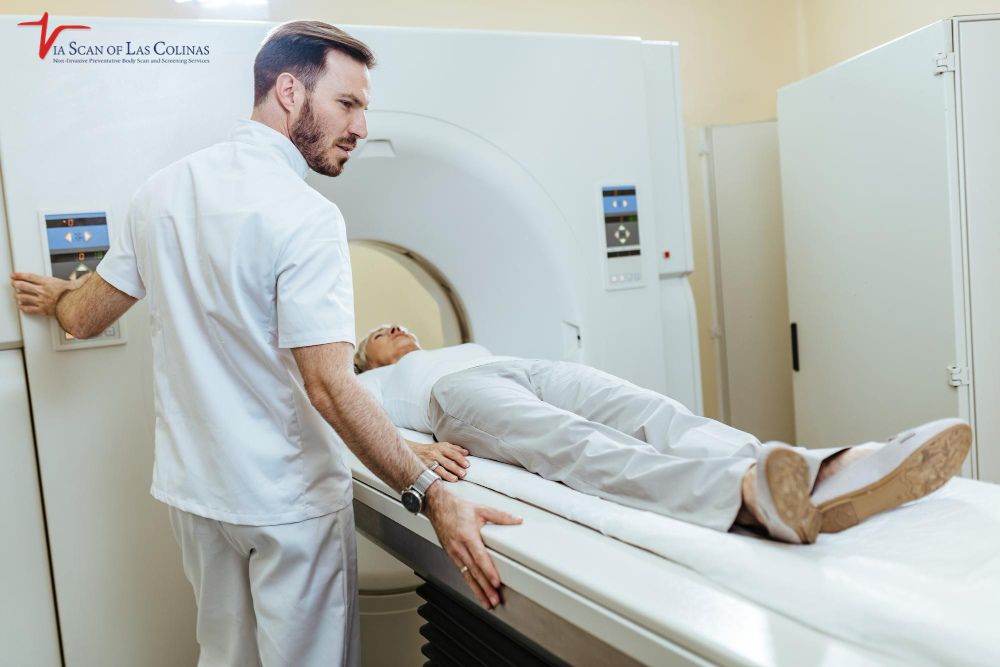

When the doctor has said that you need a coronary CT scan as part of that check-up, you may be asking yourself, ” Is that safe with a stent in my artery? It is a perfectly legitimate question, and one that is becoming increasingly posed by patients as CT imaging technology keeps on developing. The quick answer is yes- in most instances, it is safe. But the more important answer is to know. We can go through it step-by-step.
Can Patients that have a Cardiac Stent safely take a Coronary CT Scan?
Yes – the vast majority of patients who have a cardiac stent can safely receive a coronary CT scan. The CT process does not have any impact on the stent itself. Compared to MRI machines, which operate under the influence of strong magnetic fields, CT angiography takes X-rays, and metal stents are not an issue in that context. The risks of a heart scan related to the CT procedure itself are usually minimal and are concerned with the usage of contrast dyes and radiation exposure, which your doctor will consider in regard to your personal health history before advising you to have the scan.
Medical Guidelines and Safety.
- CT angiography is not able to interrelate or disturb the stent. The stent is maintained structurally stable during the scan. The risks of heart scan during post-stent imaging do not depend on the stent material, but on patient-specific conditions like the functioning of the kidneys, which is the case when contrast dye is used, and the overall cardiovascular stability at the time of the imaging.
- Medical practices advise that post-stent imaging recommendations be determined at the personal level by the treating cardiologist. Not all stent patients necessarily need a coronary CT scan, and not all patients are equally good candidates. The results of the evaluation of your clinical history, the type of stent that was placed, and your current symptoms by your doctor lead to the decision of whether or when the next step should be CT angiography.
What is the Effect of a Coronary CT Scan in Patients with a Stent?
A coronary CT scan – also known as CT angiography – is an X-ray-based cross-sectional imaging of the heart and its blood vessels, typically enhanced with an injected contrast dye, which causes blood vessels to show up more clearly on the scan. The aim of post-stent imaging is to examine blood flow over and around the stent and determine the status of the other coronary arteries. It is a non-invasive procedure that can be successfully done and relatively fast, so this is an attractive monitoring tool to most cardiac patients.
Limitations of Imaging Technology and Visualization.
- The new CT angiography technology has also enhanced its capability of imaging the coronary arteries in post stent patients. The newer generation scanners have higher resolution images with less artifact interference due to the stent material – enhancing the possibility of the cardiologist to analyze the blood flow inside and around the treated artery.
- There are limits to visualization. Metal in a stent may produce a phenomenon known as blooming artifact by radiologists a halo effect that slightly obscures the interior of the stent on the image. It is a recognized and familiar shortcoming of the coronary CT scan imaging of stented arteries and radiologists are trained to consider and interpret such results in the proper clinical setting.
Can Coronary CT Scan Be Relied upon to assess Stents in the arteries?
Here the answer must be given with certain subtlety. CT angiography is very precise when it comes to assessing the overall coronary arteries – but precision within the stent is dependent on a number of factors. Coronary CT scan is a useful and effective tool in the assessment of arteries behind the stent and identifying fresh disease in untreated vessels. Additional imaging can be sometimes prescribed by the treating cardiologist to carefully evaluate what is going on within a stent placed previously.
Elements That influence Image Clarity.
- The size of the stent is significant to image quality. Stents with a larger diameter (typically over 3mm) are better visualized on CT angiography than smaller stents (blooming artifact effect) and internal evaluation is more difficult due to the blooming effect on post-stent imaging technology even with sophisticated equipment.
- The scan heavily depends on the heart rate to get the sharp image. A more gradual and steady heart rate yields sharper images with less motion blur, and occasionally patients are even placed on beta-blockers prior to a coronary CT scan in order to get the heart rate within a good imaging range.
- The artifact also depends on the stent material and design as well. Some of the alloys used to create stents cause less interference than others – and the treating cardiologist will consider the type of stent when deciding whether a CT angiography is the best post-stent imaging tool to be used on a particular patient.
What Are the Recommendations of Doctors on When to Perform a Coronary CT Scan on Stented Patients?
Coronary CT scan is usually prescribed by doctors to stent patients in certain clinical circumstances but not as a follow-up in all post-stent patients. The choice is based on symptoms, time passed after the placement of stents, and the general clinical presentation. CT angiography is especially helpful in the assessment of new or progressive symptoms in patients who do not want to be subjected to more invasive tests, and in the assessment of the coronary arteries beyond the stented segment as to the development of new disease in the long-term.
The risks and benefits of heart scan are never taken together, and the best thing that a patient can do is to seek professional advice with his/her cardiologist before undergoing any type of post stent scan.
Choose Our Preventive Heart Scan
Early Detection Saves Lives!
-
- Accurate
- Quick Result
- Affordable

Conclusion
One of the most significant things a patient can do to remain proactive and heart-health conscious after a cardiac stent is to remain proactive. The ViaScan of Las Colinas provides an advanced preventive imaging service, such as CT scan and whole body scan, with a larger approach of health awareness. The services are not in place of clinical diagnosis or treatment and are intended as an addition to your current cardiac services. Discuss with your cardiologist what type of imaging would be suitable in your case and post-stent monitoring.