
Lower Left Abdominal Pain: Causes, Symptoms & When to Get Scanned
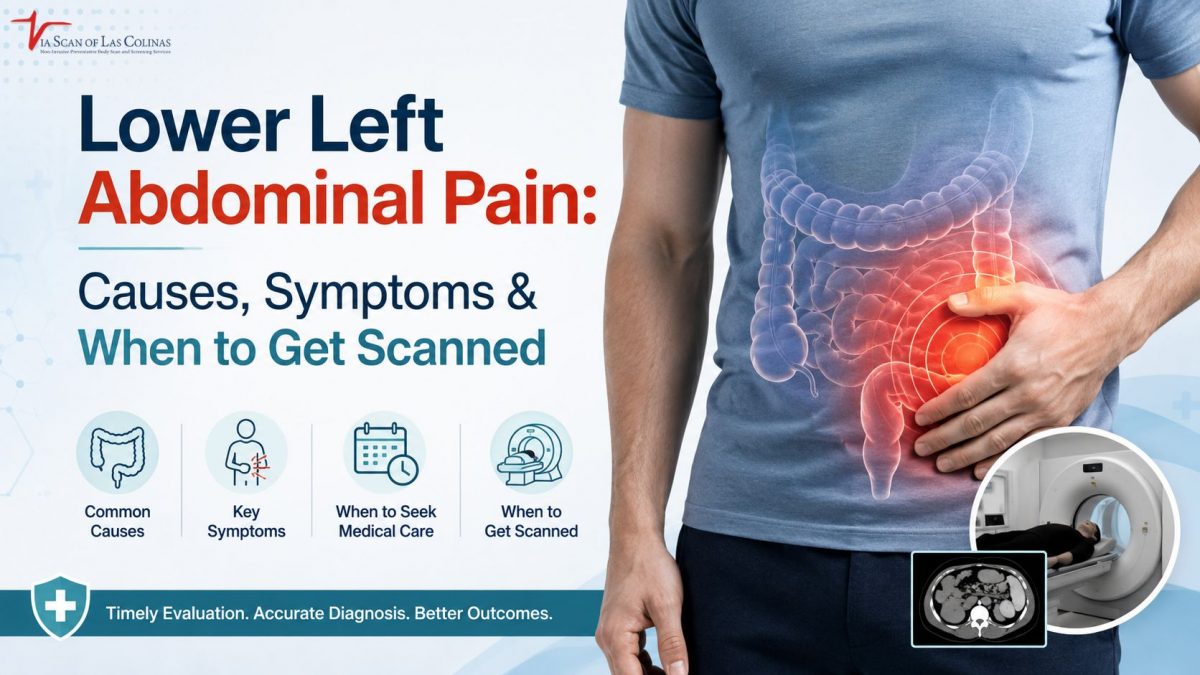

The lower left quadrant of the abdomen can be affected by a multitude of illnesses, from a flare-up of the gut to an emergency. It is where the descending colon, left kidney, left ureter, and, for females, the left ovary and fallopian tube are located. Pain in the lower left abdomen can have several possible causes, and its significance depends on its severity, duration, and accompanying symptoms.
This blog provides you with a step-by-step analysis of when to use imaging and warning signs and symptoms.
What are the most common causes of lower left abdominal pain?
Lower left abdominal pain is usually due to digestive, urinary, reproductive or musculoskeletal issues. The nature of the pain, its onset, and its accompanying symptoms give valuable hints to the involved system.
Gastroenterological, urinary, reproductive, and musculoskeletal disorders
- Diverticulitis — Inflammation of the pouches in the colon wall brings on sharp localized pain in the lower left quadrant of the abdomen, sometimes with fever, nausea, and altered bowel movements. These symptoms can occur with diverticulitis, although other digestive conditions may cause similar symptoms. A healthcare professional can assess the symptoms and determine whether further testing is needed.
- Pain in the lower abdomen, back, or groin, particularly when accompanied by painful urination, frequent urination, or blood in the urine, can occur with kidney stones or urinary tract infections. Fever and chills may also indicate a kidney infection and require prompt medical assessment.
- For females, pain related to the reproductive system may occur around menstrual periods or arise from conditions such as ovarian cysts, endometriosis, or ovarian torsion, which require different levels of urgency. If pregnancy is possible, one-sided lower abdominal pain can also be a sign of an ectopic pregnancy, which is a medical emergency.
- Physical effort or a weakened abdominal wall, muscle strain, or hernia — Musculoskeletal pain from physical exertion or a weak abdominal wall that gets worse with exercise or pressure but no digestive or urinary symptoms.
What could be the serious condition if the lower left abdominal pain has symptoms?
Some symptoms in combination with lower left abdominal pain, indicate that there is a serious problem that requires immediate medical attention.
Warning Signs that should not be ignored:
- Fever accompanied by lower left abdominal pain can indicate an infection or inflammation, including diverticulitis or a kidney infection. Medical assessment is recommended, particularly when fever occurs with worsening pain, chills, or vomiting.
- Blood in the stool or urine alongside abdominal pain warrants medical evaluation. The cause may require blood or urine tests, imaging, or other investigations depending on the symptoms and clinical findings.
- If the pain is sudden, severe, and quickly getting worse, it could be a surgical emergency like a ruptured cyst, ovarian torsion, or perforated bowel, and care should be sought immediately without waiting for symptoms to improve.
- Persistent vomiting, abdominal swelling, and an inability to pass stool or gas may indicate an intestinal obstruction. These symptoms require urgent medical assessment.
When should you seek medical attention for lower left abdominal pain?
If pain is sudden, severe, or worsening quickly, get emergency medical help right away. A scheduled appointment is appropriate when the discomfort is mild and improving and occurs intermittently. The following table will help you make a decision.
If any doubts, please get medical evaluations. Persistent or new or worsening lower left abdominal pain is a sign to seek medical attention.
Emergency Symptoms vs. Non-Urgent Discomfort
| Seek Emergency Care | Schedule an Appointment |
| Sudden or severe pain | Mild pain that comes and goes |
| Fever above 101°F | Dull ache without other symptoms |
| Blood in stool or urine | Bloating or gas-related discomfort |
| Rigid or tender abdomen | Pain that improves with rest |
| Dizziness or rapid pulse | Cyclical pain tied to menstrual cycle |
When Is Imaging Recommended for Lower Left Abdominal Pain?
Imaging may be recommended when the cause of lower left abdominal pain remains unclear after an initial assessment, when a condition such as diverticulitis is suspected, or when complications need to be evaluated. The choice of imaging depends on the patient’s symptoms, examination findings, and medical history.
What role do CT Scans and Other Tests Play in Finding the Cause?
- For adults with lower left abdominal pain, a CT scan of the abdomen and pelvis with intravenous contrast is often an appropriate initial imaging test, particularly when diverticulitis is suspected. The clinician selects the examination based on the suspected cause and the patient’s circumstances.
- For suspected kidney stones, CT of the abdomen and pelvis without intravenous contrast is commonly appropriate. Ultrasound may be preferred in some circumstances, including pregnancy, so the imaging choice should be made by the treating clinician. [1]
- MRI may be considered in selected cases when additional soft-tissue detail is needed or when avoiding ionizing radiation is important. It is not routinely the preferred test for all cases of chronic lower abdominal pain.
- When a gynecological cause is suspected, pelvic ultrasound is often an initial imaging test. Further evaluation with MRI or CT may be considered depending on the suspected condition, pregnancy status, and ultrasound findings.
Whole-body scans are not designed to diagnose the cause of new, persistent, or unexplained abdominal pain and should not replace a clinical assessment. Anyone experiencing ongoing or worsening symptoms should consult a healthcare professional, who can determine whether targeted diagnostic imaging or other tests are appropriate.
Conclusion
Lower left abdominal pain is not something to take a stab at. The causes can be manageable or urgent; the appropriate action will depend on your symptoms.
If pain is new, persistent, worsening, or accompanied by warning signs, seek medical advice rather than relying on screening imaging to investigate the cause. A healthcare professional can recommend the appropriate evaluation based on your symptoms and medical history.
If you’re symptom-free and interested in proactive health screening, learn more about ViaScan of Las Colinas. If you have pain or any warning signs described above, contact your doctor or seek emergency care first.
References:
[1] RadiologyInfo (Radiological Society of North America and American College of Radiology) — Acute Onset Flank Pain, Suspicion of Stone Disease (Urolithiasis). https://www.radiologyinfo.org/en/info/acs-acute-onset-flank-pain-suspicion-stone-disease