
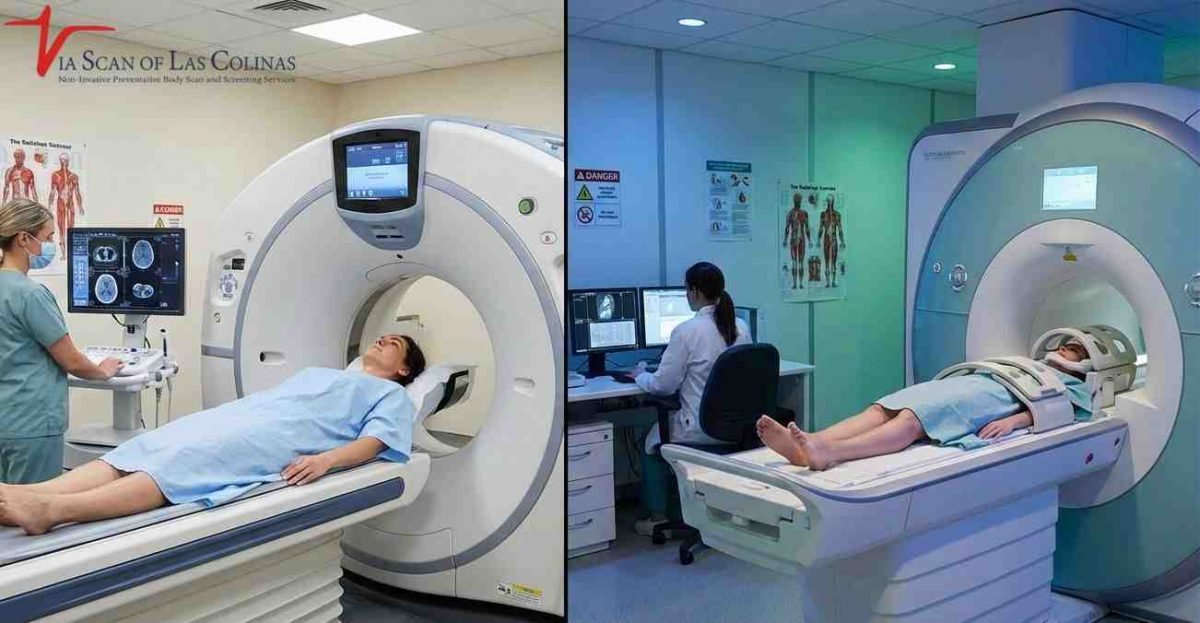

When a physician prescribes brain imaging, you may ask yourself what is the best test; MRI or CT scan. The fact is that neither of them can be generally considered to be better than the other one. Both imaging methods have certain advantages, and it is important that you have the right imaging method based on what your healthcare provider wants to see and why he or she orders the test. Learning the distinctions between these two significant diagnostic tools will make you feel more confident about your healthcare services. The services of ViaScan are located at Irving, TX, where we offer advanced CT scan services that are vital in brain imaging to give you the results you need. We shall discuss the difference between MRI and the brain CT scan technology and which one can better benefit you.
Which provides better brain imaging, MRI or CT scan?
Neither MRI nor CT scan is universally superior in brain imaging but each is superior in a different cases. MRI gives a very precise picture of soft tissues and is therefore very good in identifying mild abnormalities in the structure of the brain. A CT scan of the brain, however, is quicker and better in demonstrating bleeding, skull fractures, and calcifications. Depending on your particular symptoms and what your doctor needs to examine, he or she makes the choice. To illustrate, in cases where a patient is brought to an emergency room with a head injury, a CT scan is usually one of the first options as it is fast and effective in identifying serious issues. In the investigation of chronic headaches or suspected tumor, MRI may be a better choice due to its better soft tissue resolution.
Key Diagnostic Differences
- Speed: CT scans require only a matter of minutes, whereas MRIs may require 30-60 minutes.
- Image resolution: MRI has better soft tissue contrast and resolution.
- Bone visualization: The CT images display bones and calcifications better.
- Availability: CT scanners are more universal in emergency settings.
- Price: A CT scan is comparatively cheaper than MRI.
- Patient tolerance CT is less claustrophobic or restless, while open MRI options can improve comfort for sensitive patients
When Each Scan Is Preferred
- MRI is the choice for: brain tumors, multiple sclerosis, ischemic stroke detection (especially beyond the hyperacute phase), detailed brain structure evaluation, pituitary disorders.
- CT scan of choice: Head trauma, possible bleeding in the brain, skull fracture, initial emergency stroke assessment to rule out hemorrhage, screening of abnormalities.
- The benefits of CT include emergencies, implants of metals in patients, and fast screening.
- MRI benefits: elaborate neurological assessment, soft tissue disease, sequential imaging of known diseases.
Which brain conditions can be optimally identified through MRI?
MRI is good at identifying the conditions of the soft tissues of the brain and the internal organs. It is a type of imaging in which extremely detailed images of your brain are produced without radiations by using intense magnets and radio waves. MRI, especially with contrast, may show issues that may not be visible using the other tests of imaging. MRI is commonly used by neurologists when exploring symptoms such as chronic headache, vision alteration, memory loss, or unexplainable neurological symptoms, which need to be examined in detail through the use of brain tissue.
Soft Tissue and Nerve Detail
MRI has an unparalleled visualization of both the white and gray matter of the brain whereby the structures that cannot be seen well via CT scanners are seen clearly in MRI. This is a thorough imaging that assists the physician to determine inflammation, infection or minute tissue changes which may give a clue of disease. MRI is able to visualize the nerve routes of the brain and this is very effective when assessing disorders that influence the functionality of the brain. The technology also enables the doctors to view various types of tissues depending on the amount of water content and chemical structure and also displays abnormalities which may not be detected by other imaging systems.
Tumors and Neurological Disorders.
In cases where doctors suspect that the brain has a tumor, MRI is normally the imaging test of choice since it reveals the size, location and attachment of the tumor to the other structures of the brain in an astonishing manner. The MRI is also the gold standard in the diagnosis and monitoring of multiple sclerosis as it makes the characteristic lesions of the brain and spinal cord visible. In conditions such as Alzheimer disease, MRI assists physicians in determining how the brain volume and tissue deteriorates with the course of time. Also, MRI is known to give detailed images in the detection and follow-up of aneurysms, disorders of the pituitary gland and assessment of congenital brain conditions that may not be seen in CT images.
In which cases does a CT scan become superior in the evaluation of the brain?
A CT scan to the brain turns out to be the better option in cases where there is urgent outcome especially during an emergency. In cases where one has sudden severe symptoms such as loss of consciousness, acute confusion or head trauma, doctors require an answer within minutes rather than 30 to 60 minutes which an MRI would demand. They seek such answers fast, and CT scans are the provider of time-sensitive treatment decisions to the medical teams. The CT scans are indispensable in the emergency departments because of the speed advantage that could save lives literally. The CT scan services provided by ViaScan in Irving, TX, have adopted the latest technology which makes it an effective way to have clear and correct images of the brain.
What is the difference between the MRI and CT scans in terms of safety and radiation?
Among the major differences in MRI and CT scans is the exposure to radiations. MRI involves magnetic fields and radio waves; no radiation at all, it is therefore safe to be used again and again in instances when it is medically required. A CT scan on the brain also involves X-ray radiation but modern CT technology has greatly minimized the level of exposure to X-ray radiation than the older machines. The dose of the radiation is relatively low in case of one brain CT scan, and it may be regarded as not hazardous in the case when the diagnostic value of the CT scan is greater than the risk. Your medical practitioner is very mindful of the radiation exposure particularly to children or patients who need scans on a regular basis.
Radiation Considerations
- CT radiation exposure: A brain CT scan is associated with low dose radiation exposure which poses minimal risk to the majority of patients when used appropriately, and the possible risks are far less than the benefits, as associated with proper diagnosis.
- MRI safety profile: MRI does not use any radiation, so it would be better than other scans when repeated scans are required over time, but it cannot be used on patients with some metal implants or devices.
Choose Our Wellness Body Scan
Early Detection Saves Lives!
-
- Accurate
- Quick Result
- Affordable

Conclusion
The decision between making an MRI and CT scan of the brain will be determined by your medical circumstances, and the medical practitioner will prescribe the right test to undertake. At the ViaScan in Irving, TX, the CT scan services are offered by our professional radiologic technologists who are well trained to perform CT scans on patients with the state-of-the-art equipment that ensures the patients get the accurate brain imaging in the comfort of them. We also provide full-body scan services for individuals who require physician-directed health screening.