
Family history of Heart Disease: when to get screened
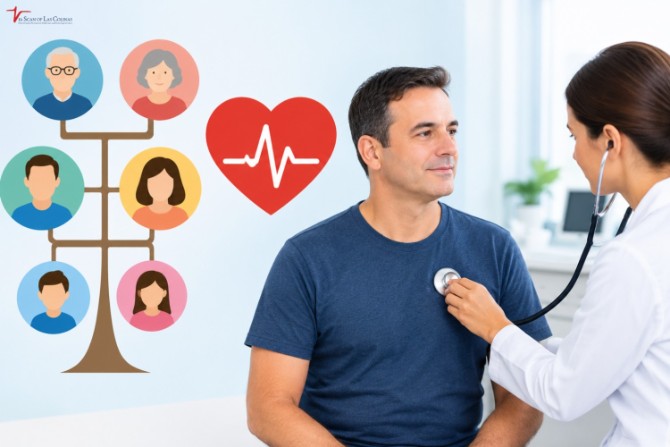

It can be beneficial to begin heart checks with your doctor as early as your 20s, and to inquire at your 30s or 40s about additional tests like a heart scan. Well, that’s the short answer! You have a lot of things to give thanks to your family for, such as your smile and your eye color. It also occasionally transmits an increased risk of heart disease. Fortunately, if you know your family history, you have the opportunity to move ahead in advance. In the following, you will find out what family history is, when to begin screening, what tests can be used, and the role inherited cholesterol plays.
What is meant by family history of heart disease and how can it impact your own risk?
If a family member, like a parent, brother, sister, or child, has had heart disease. This may be a heart attack, a blocked artery, pain in the chest, or a stroke. How does family history affect heart disease risk? People in the same family often share genes. Those genes can influence cholesterol levels and blood pressure. They can also affect how the arteries wear down over time. On top of genes, families also tend to share habits. Diet patterns can be similar. Activity levels often run in the same direction too. Having a family history does not mean you will get heart disease. Still, it can raise your chances.
Identifying inherited heart risks
Not all family history counts the same. Parents, brothers and sisters are most important because you share the most genes. Increased risk can occur if two or more close family members are affected. Record the names of those who suffered from heart issues, and their age. Take this list to your doctor as it is an important component of risk assessment for heart disease.
At what age should you start heart health screening if a close relative developed heart disease early?
So you’re looking for when to start heart disease screening – the answer is sooner than you think. It is recommended to start measuring blood pressure and cholesterol in most people from their 20s, by many experts. Your doctor might recommend earlier starting time in addition to more frequent monitoring if you have a family history of heart disease at a young age. Advanced tests, such as a coronary calcium scan, might be discussed with a doctor in the late 30s or 40s, rather than later, for some who have a strong family history.
The Impact of Premature Heart Disease
- What “early” actually means: If the father or brother was diagnosed with heart disease before age 55 or the mother or sister before age 65.
- Better signal: Early cases may have more to do with inherited factors than daily routines.
- Children also: Children in these families might also require a cholesterol test starting as early as age 2.
- Lipoprotein(a): Lipoprotein(a): This is inherited cholesterol protein that is only tested once.
What are some heart health checks that can detect heart health risks before symptoms are experienced?
There are several easy tests that can identify the presence of heart risk before you may experience any symptoms. The usual screening tests which begin with blood pressure readings, a blood cholesterol test and a blood sugar test are often used to screen for heart disease. Your doctor may also check your weight and waist size. Imaging tests can provide more information for those who are at higher risk. A coronary calcium scan is a form of CT scan that is performed to search for calcium in the heart arteries.
Blood pressure, cholesterol and other tests are conducted.
- Blood pressure: <120/80, normal.
- Cholesterol panel: Measures bad (LDL), good (HDL) cholesterol and triglycerides.
- Blood sugar: A blood test called A1C is used to tell how well blood sugar levels are controlled over the past three months or so.
- Calcium score: A coronary calcium score of 0 means no calcified plaque was detected, but it does not rule out all coronary artery disease or eliminate heart disease risk.
Discuss with them how often they should get a cardiovascular disease screening based on individual results.
How can inherited high cholesterol increase the risk of heart disease in younger adults?
Some individuals inherit an abnormal gene which makes it difficult for the body to clear LDL cholesterol from the blood. This means that cholesterol levels may remain elevated since birth. With years, additional cholesterol can accumulate in the walls of the arteries and create plaque. This can mean that plaque can begin to build up a lot earlier than for others. This is why some young adults can develop heart issues in their 30s, 40s or 50s, despite the best intentions of their eating and exercise habits. Can you get a preventive heart scan? Yes. ViaScan provides a number of imaging options, including a heart scan and CT scan, to identify any anomaly early.
Familial Hypercholesterolemia
Called familial hypercholesterolemia or FH, this is an inherited condition. It affects about 1 in every 250 people. When an adult’s LDL level is 190 or above, doctors may suspect FH. In some people, they may see yellow bumps on skin or at the location of tendons. Parents, siblings and children of those with FH may also be encouraged to have their own cholesterol levels tested.
Choose Our Preventive Heart Scan
Early Detection Saves Lives!
-
- Accurate
- Quick Result
- Affordable

Conclusion
You are not stuck repeating what your family did. Still, it can offer a hint. If heart disease runs in your family, and the timing fits, talk with your doctor. Ask when you should start heart screening and what tests make sense for you. Get guidance from a professional. Tell them what you know about your family history. Keep an eye on your results over time. If you and your physician agree that imaging may benefit you, there are preventive imaging options available at ViaScan of Las Colinas that can help you care for your health, including a heart scan, wellness body scan, and CT scan. The little bit of knowledge you will have today will enable you to take care of the heart that works for you daily.