
Preventive screening guidelines by age (40s, 50s, 60s+)
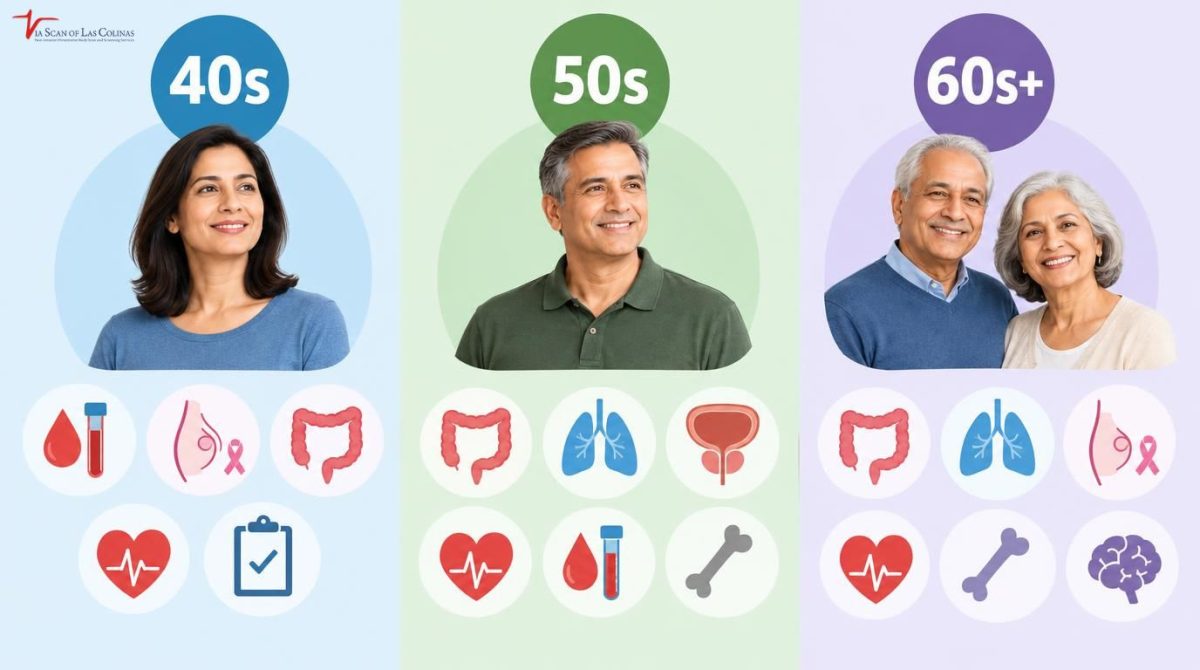

Generally, the suggested preventive screening guidelines differ by age: adults between 40 and 49 start to begin screening regularly for blood pressure, cholesterol, blood sugar, and certain cancers; adults 50 and older begin screening regularly for additional cancers; and adults over 60 begin screening to monitor the health of their bones, heart, hearing and memory. This is the short version! Consider screening similar to a routine physical exam for parts of your body that you can’t see. Numerous diseases develop insidiously over a period of several years and then become noticeable. Early detection can provide options for you and your doctor. As a team dedicated to preventative imaging, we want this topic to be easy and accessible. We explain what screening is and what types of screening are important at different ages below.
What is preventive screening and how do routine health assessments help identify problems before they occur?
Preventive screening is screening done before you get sick. Blood tests, blood pressure, physical and imaging tests may be performed. Sometimes serious conditions, such as high blood pressure, diabetes, some cancers, and heart disease can develop without obvious symptoms. These changes can be identified through screening at an earlier stage, when there are typically more opportunities to manage the changes. Can you get a preventive heart scan? Screening for heart disease. Can present with warning symptoms months or years before a person experiences chest pain or shortness of breath. The vast majority of screenings are quick and simple.
The Purpose of Early Detection
- Establish a starting point: First results provide a baseline to compare to later.
- Help your doctor make suggestions to follow for your personal plan: Results
- To promote positive behaviors: Numbers can be used to encourage positive food, sleep and exercise behaviors.
- Find peace of mind: Normal results can help to bring peace of mind.
- Family risks: Screening helps those at risk to be watchful.
Are there other health risks and screenings that adults should be mindful of in their 40s?
Yes, the body starts to go through subtle changes in the 40s. There are many guidelines that recommend blood pressure checks at least once a year and cholesterol checks every couple of years. People with an increased risk of diabetes should start having their blood sugar checked around age 35 to 40. Mammograms are generally recommended for women at age 40, while colon cancer screening often is recommended at age 45. It’s also a good decade to have a cardiovascular risk assessment. As people begin to get older, they start asking whether to get a calcium score test when they are in their 40’s. Your doctor can help you make a decision based on your risk.
Building Healthy Habits Midlife
Small habits are great ways of creating routines in midlife. Get approximately 30 minutes of aerobic exercise (like brisk walking) per week. Take half of your plate with vegetables and fruits. Get seven to nine hours of sleep per night and refrain from smoking. Keep a simple folder of test results to be shared at each doctor’s visit.
How do screening priorities change during your 50s as the risk of certain diseases increases?
Screening plans may increase in your 50s because there are more diseases that increase in risk at that age. Regular screening for colon cancer is ongoing. Adults with a long smoking history may be advised to get yearly lung cancer screening with a low-dose CT scan, starting at age 50. Men might start talking to their health care provider about prostate cancer screening. Risk of heart problems increases during this decade, and some individuals opt to have a coronary calcium scan to find out more about plaque in the arteries of the heart. Heart scans at imaging centers like ViaScan of Las Colinas can help you get the information you need to talk with your doctor about.
Aging and Changing Health Risks
Heart and bone risks are increased for women during menopause, when the body’s levels of estrogen are reduced.
- Tighter blood vessels: The vessels have less bend, which may raise blood pressure.
- Slower metabolism: The body’s metabolism slows down and weight and blood sugar levels increase.
- As cells change, so do they, little by little, increasing the risk of cancer.
- Risk of shingles: Beginning at age 50, a vaccine against shingles is recommended.
Which screenings might be more important for older adults, ages 60 and older?
As you get older (age 60 and up), screening typically aims to help you remain strong, steady and independent. Women are also recommended to receive a bone density scan at the age of 65 for osteoporosis monitoring. Men who have smoked at any point in their lives and are between the ages of 65 and 75 may be recommended to have an ultrasound to look for an abdominal aortic aneurysm (AAA). Other tests are also more likely to be done, such as hearing, vision, memory, and fall risk tests. Certain screening procedures, like the cervical cancer test, can be discontinued after age 65 for individuals who have had normal screenings in the past.
Keeping Well In Old Age
At this point in life, it’s a great time to continue traveling, staying connected, and staying immunized (vaccines like the pneumococcal vaccine and the RSV vaccine). Talk to your doctor about tests that are still appropriate for you. When you have had a heart scan, knowing the ranges of the coronary calcium score will help you to interpret the results of your scan and to ask more questions.
Choose Our Preventive CT Scan
Early Detection Saves Lives!
-
- Accurate
- Quick Result
- Affordable

Conclusion
Preventive screening is not a matter for worry. It’s learning about your body, and communicating with your doctor to help keep you healthy through all ages. When you reach your 40s, start with the basics. Build a steady plan you can stick to. In your 50s, keep adding more checks as time goes on. Include reviews and tests your team recommends. Once you are in your 60s and later, focus on staying fit. Use your age, your health history, and your aims. If you and your doctor agree it may be useful, consider a heart scan. You may also choose a full body scan or a CT scan. These scan choices are available at ViaScan of Las Colinas to support your care. Simple planning today can lead to increased confidence tomorrow.