colonoscopy-diet-1200x800.jpg
26/Jan/2026

A very frequent question is: what can you eat a day before colonoscopy, when you are scheduled to have one?. What you eat tomorrow is such a big deal. Eating the correct foods helps reduce residue, which aids doctors in obtaining clearer imaging results. This is a guide that describes the colonoscopy prep diet in very simplistic terms. It is authored by a medical practitioner, examined by qualified professionals, and aimed at helping the Irving, TX residents feel relaxed and ready.

Which foods should one eat a day before colonoscopy?

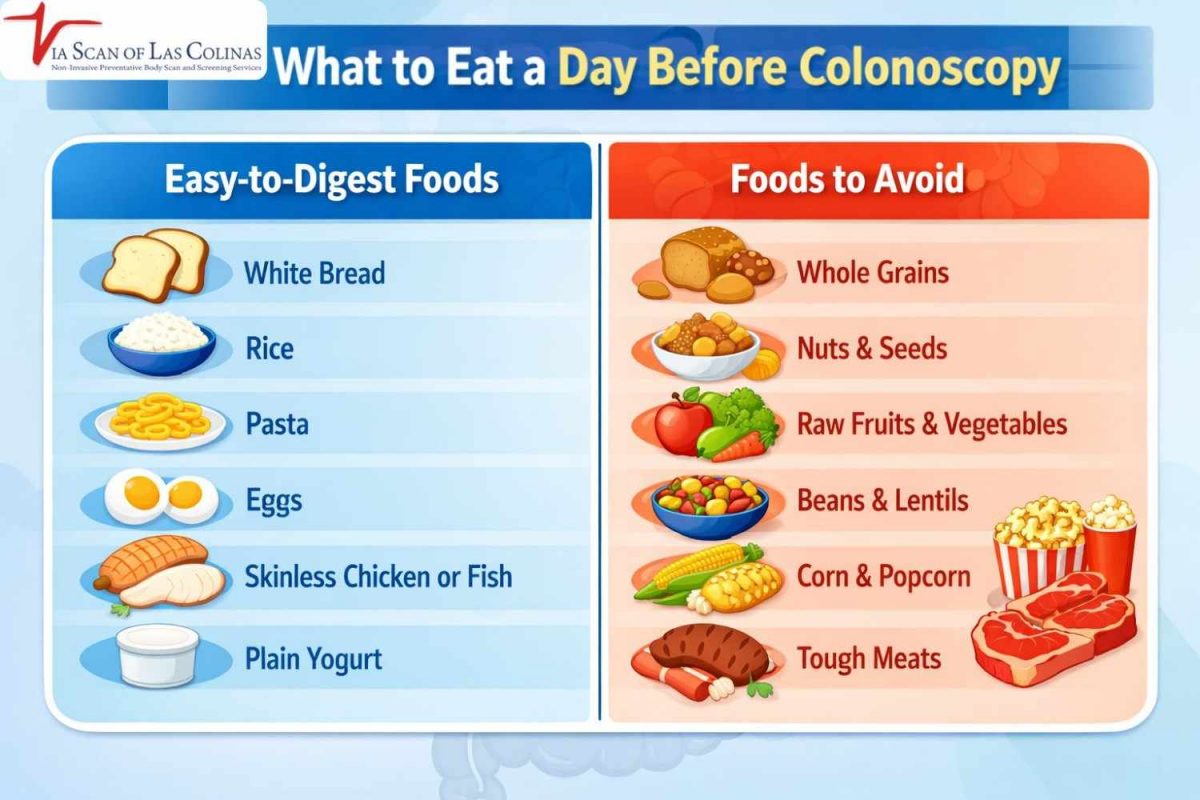
On the eve of your colonoscopy, you should consume food that is easy on the stomach, and that leaves minimal amount of waste. These are fast digested foods that do not adhere to the walls of the colon.

Low-fiber and soft foods are generally recommended earlier in the day. These foods make you stay comfortable as you prepare your body for clear imaging. Proper diet helps achieve accurate diagnostic findings. The right foods to eat before colonoscopy is not about eating less. It is about eating smart. In case of any uncertainty, eat small, plain and simple.

Foods That Are Easy to Digest

  • White bread or plain toast
  • White rice
  • Plain pasta
  • Scrambled or boiled eggs
  • Skinless chicken or fish
  • Yogurt without fruit pieces

What is so special about diet restriction the day before a colonoscopy?

The diet restriction assists in maintaining the colon clean to have a clear profile after imaging. Food leftovers may obstruct scans, making them harder to interpret if they remain in the colon. A healthy bowel facilitates the work of medical imaging departments to detect the colon perfectly. This is why doctors provide specific food guidance before a colonoscopy. 

The dietary procedure based on a correct colonoscopy pre-cleaning facilitates proper diagnostic visualization and minimizes the risk of the necessity of a new scan. In practice, preparation is as important as the scan itself. ViaScan Medical center has made it its point to provide diagnostic imaging services that are precise, clear, and comfortable to the patients, with correct preparation being one of the components.

What are the foods you need to avoid prior to a colonoscopy?

Some foods remain longer in your body and are difficult to digest. Such foods leave residues behind, and this may affect the quality of scan. Avoid high fiber foodstuffs, food that is coarse in texture and difficult to digest. Such foods may retard digestion, and have an influence on imaging.

It is as important to know what to avoid eating as compared to foods to eat prior to a colonoscopy. Premeditation will remove them beforehand and promote the proper preparation and outcome.

Foods to Avoid Before Colonoscopy

  • Whole grains
  • Nuts and seeds
  • Raw fruits and vegetables
  • Beans and lentils
  • Corn and popcorn
  • Tough meats

How would you know when to change solid foods to clear liquids?

Before the colonoscopy, Most individuals are instructed to switch to clear liquids in the afternoon or evening, stopping solid foods. The timing that will happen depends on provider directives. Clear liquids after & before colonoscopy aid in maintaining hydration and help minimize solid residue in the digestive tract. This will be necessary to ensure imaging and proper preparation.

Clear liquids are easy to digest and do not leave any residue. Medical practitioners suggest that this step should be done with utmost care in order to aid in proper scan outcomes. Take all instructions of your provider precisely, because the preparation procedures can be different.

What Counts as a Clear Liquid

  • Water
  • Clear broth
  • Apple juice
  • Sports drinks without color
  • Plain black coffee or tea (no milk)
  • Gelatin without fruit

Adequate preparation facilitates clear imaging of the colon in imaging specialists. This enables them to obtain quality images of a colonoscopy scan.

ViaScan is specialized in the areas of modern diagnostic imaging services, such as:

These services will be aimed at providing early detection and clear sight of diagnosis. ViaScan is a treatment-free lab that specialises in high-quality imaging for healthcare professionals.

Choose Our Preventive Colonoscopy Scan

Early Detection Saves Lives!

    • Accurate
    • Quick Result
    • Affordable

Conclusion

Understanding what one can eat the eve before a colonoscopy enables him or her to be less stressed and enhances the accuracy of the scan. Even small choices, like the type of food, can impact scan accuracy. Recent research has shown that it is possible to assist in clear diagnostic outcomes by doing a proper colonoscopy prep diet, not eating hard-to-digest foods, and changing to clear liquids on time. In the case of Irving, TX residents in need of quality imaging services, ViaScan provides quality diagnostic scans with attention being paid to accuracy, education and patient care- since proper preparation is the key to better clarity.


diet-guide-after-colonoscopy.jpg
19/Jan/2026

A colonoscopy is a method that aids the doctor in examining the inside of your colon to detect abnormalities, such as polyps, inflammation, or early signs of colorectal cancer. You may feel drowsy and experience stomach sensitivity after the procedure. That is normal. Eating the appropriate foods can make you feel better in a shorter time and make you stay comfortable. This is a guide that is written in such a simple language like a medical professional explaining things straight forward. It is checked thoroughly to promote proper diagnostic outcomes and patient health. At ViaScan, we specialize in quality imaging services, including colonoscopy scan, CT scan, and whole-body scan, to enable patients to get the answers without straining.

Which foods to take right after colonoscopy?

After having gone through the colonoscopy, your gastrointestinal system requires soft and tender food. The scan cleansed your bowel, and hence your stomach requires time to be reawakened again. Start slow. Small meals are best. Consume fluids first followed by light foods.

Light Meals That are simple to digest.

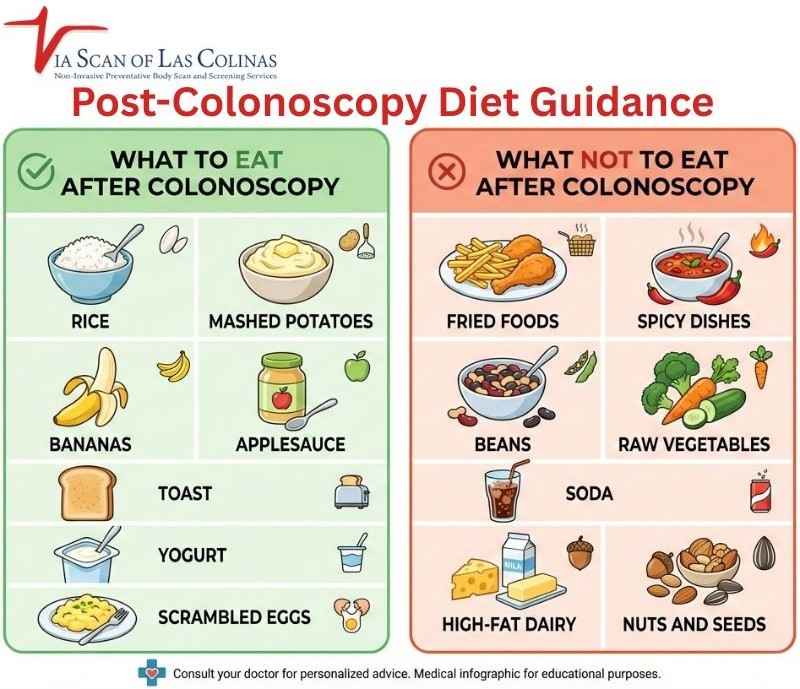
  • Plain white (boiled) rice
  • Mashed potatoes
  • Applesauce
  • Bananas
  • Toast or white bread
  • Yogurt (plain, low-fat)
  • Scrambled eggs

These are foods that do not take a toll on your stomach and therefore prevent discomfort. Avoid eating too much at once. Listen to your body. Moderate dieting facilitates comfort and aids in ensuring the precision of results of colonoscopy scans analyzed by certified imaging professionals at ViaScan.

What is the significance of the correct choice of foods following a colonoscopy?

The selection of the appropriate foods will make your stomach feel relaxed and joyful. Some air may remain in your colon after the procedure, which causes bloating or discomfort. Certain foods may aggravate this. This is aimed at preventing pain, gas or bloating.

Avoiding Bloating and Discomfort.

Soft foods are easily digested and they do not produce additional gas. This assists your body to restore normalcy. Consumption of inappropriate foods prematurely may result into cramps or swelling. This is the reason why a cautious diet is advised by medical experts.

Most of the patients pose such questions as what to eat 2 days before colonoscopy or what can you not eat 5 days before a colonoscopy. Those are the steps that assist in preparing the body. It is also important to eat immediately after the scan in order to be comfortable and recover.

What foods are not to be taken after a colonoscopy?

Certain foods are difficult to digest by your stomach immediately after a colonoscopy. These are foodstuffs that may lead to gas, cramps or pain. It is preferable to wait some days before you can eat them again.

Objects That may lead to Gas or Cramping.

  • Fried foods
  • Spicy foods
  • Beans and lentils
  • Raw vegetables
  • Soda and fizzy drinks
  • Dairy with high fat
  • Nuts and seeds

Such foods are irritating to your digestive system. Keep out of the way until you are yourself. Following these guidelines can help patients stay comfortable while physicians review the outcomes of imaging of colonoscopy or CT scans that have been carried out in reputable facilities such as ViaScan.

What is the duration of the post-colonoscopy diet?

Most people need a mild diet for no more than three days. Everyone is different. Some feel fine the next day. Others require some additional time. The trick is to go at a glacial pace and listen to the way your body responds.

Signs your Digestive System is Returning to Normal.

  • No stomach pain
  • No bloating
  • Normal bowel movements
  • Return of appetite

These signs will mean that you can gradually resume your normal diet. In case you had some questions before your scan such as “what can you not eat 5 days before a colonoscopy”, keep in mind that preparation and recovery do work together in order to give the right outcome.

Choose Our Preventive Colonoscopy Scan

Early Detection Saves Lives!

    • Accurate
    • Quick Result
    • Affordable

Conclusion

ViaScan offers superior imaging services aimed at disease prevention and reassurance. Our services cover colonoscopy scans, CT scan and wellness body scan, which are checked by licensed imaging professionals. We are interested in the clearness, accuracy, and comfort of the patient.

In case you are a resident in Irving, TX, and require professional imaging services in a caring and understandable manner, ViaScan is one that can join you in your health journey, before, during, and after a scan.


psa-level.webp
29/Sep/2025

Like a smoke detector warns you of danger ahead, PSA levels can alert you when you should take some concern about your health. One of the most significant tools for men to maintain their health as they age is PSA testing. Although the term dangerous may be frightening, a large proportion of high levels of PSA are not life-threatening. Instead, they are like a pat on the shoulder to say Hey, let us take a closer look. It is essential to understand your figures and determine the next steps.

At ViaScan, we understand how medical figures can be confusing and even alarming. This is why we have aimed to offer clear and advanced imaging services that accompany your PSA results, providing you with a detailed picture of your inner organs. With the assistance of the professional team that utilizes modern technology, we identify problems at their first or most curable stages. Always remember that early detection saves lives.

What is considered a dangerously high PSA level?

PSA is measured in nanograms per milliliter (ng/mL) of blood. According to the American Cancer Society, doctors consider a PSA level of 4.0 ng/mL or lower to be normal in most men. A range of 4.0 to 10.0 ng/mL is considered moderately high and requires further investigation. A PSA level greater than 10.0 ng/mL is considered high and needs medical attention as soon as possible.

It all depends upon your age and your personal circumstances, however. The PSA reading of 6.0 ng/mL may be more problematic in individuals 50 years old or older. It is also notable that PSA levels are increasing over time. 

Age Group Normal PSA Range Elevated Range High Risk Range
40-49 years 0-2.5 ng/mL 2.6-4.0 ng/mL Above 4.0 ng/mL
50-59 years 0-3.5 ng/mL 3.6-6.5 ng/mL Above 6.5 ng/mL
60-69 years 0-4.5 ng/mL 4.6-8.0 ng/mL Above 8.0 ng/mL
70+ years 0-6.5 ng/mL 6.6-10.0 ng/mL Above 10.0 ng/mL


What is the primary reason for high PSA?  

Most causes of a high PSA are not usually cancer. Your PSA may be high because of the following reasons:  

  • Benign Prostatic Hyperplasia (BPH): It is an enlarged prostate that is common in older men.  
  • Prostatitis: The Prostate is infected.  
  • UTIs: These may temporarily increase the level of PSA.  
  • Recent medical interventions: Biopsies, a catheter placed, or prostate surgery may lead to temporary spikes.  
  • Age: PSA levels increase naturally as men age.  

A PSA test, combined with advanced imaging techniques such as MRI for elevated PSA or health scanning, provides a more accurate health report. With ViaScan imaging, you and your doctor have the information to differentiate between these causes and make the correct diagnosis.  

Will high PSA cause other symptoms?  

Having a high PSA level by itself does not necessarily lead to symptoms, as PSA is merely a protein in the blood. A lot of people who have elevated PSA levels do not experience any change, so screening is important to help identify issues at an early stage.  

The symptoms may occur with a high PSA and are common, including:  

  • Changes in the urine: difficulties initiating urination, a weak urine stream, or nighttime urination.  
  • Pain: Pain or burning during peeing.  
  • Bladder problems: This is characterized by a sensation of being unable to empty the bladder.  
  • Pelvic pain: Pain in the lower back, hips, or pelvis.  

Remember that a great number of things other than PSA levels, prostate cancer risk may cause these symptoms. Total wellness body scanning by ViaScan can help determine the cause of these symptoms and provide comfort.

How is elevated PSA treated?

The management of high PSA is based on the cause of high PSA. ViaScan offers superior imaging, giving your doctor an opportunity to decide the most suitable treatment.

Active surveillance may be prescribed, which means that you follow up regularly on the level of PSA and wait before considering treatment. In cases of high PSA due to an infection, it is typically cured with antibiotics. According to the Mayo Clinic, if an enlarged prostate is the culprit, medications can help shrink it or improve urine flow.

In case the PSA level indicates that you have a high prostate cancer risk, your doctor may recommend a biopsy to identify cancer cells. PSA, along with ViaScan imaging, provides the most satisfactory information prior to any invasive exam.  Wellness screening can be used to prevent unnecessary biopsies by identifying suspicious spots.

How can I treat high PSA at home?

High PSA cannot be directly treated at home, but through simple lifestyle modifications, it is possible to support the health of your prostate. The following measures can help maintain a healthy level of PSA and promote a positive health condition.

  • Consume additional tomatoes to help maintain prostate health. 
  • When it comes to fruits and vegetables, green tea, fatty fish, which contain omega-3 fats, and an abundance of them are also good. 
  • The NIH reports that limiting red meat and high-fat dairy products may also be beneficial. 
  •  Walking for 30 minutes per day can be beneficial. Exercising well and maintaining body fitness also helps keep the prostate healthy.

 It is essential to remember that home remedies are not a substitute for professional medical care. Be aware of your PSA level before and have a health check-up early to achieve maximum results.

Does a high level of PSA mean that I have prostate cancer?  

No, it is not possible to determine whether you have prostate cancer with just high PSA levels. PSA is a screening test, not a final test. Cancer is not the only factor that can alter PSA levels. Approximately 75% of the men who have high PSA do not necessarily have prostate cancer. There are normal PSA levels in some men with cancer, particularly at an early stage. Thus, you require additional tests and images, along with PSA, to have a clear picture.

The imaging of ViaScan aids the process.  

The scans indicate to doctors whether certain spots require further examination. This comprehensive method eliminates anxiety and provides a specific diagnosis when PSA levels are also tested.

At what age should I begin to screen for prostate cancer?  

The majority of physicians recommend discussing PSA tests with your doctor starting at age 50 or so. Men at greater risk should consider discussing it earlier, between the ages of 40 and 45.

Higher risk factors include:  

  • Family history: prostate cancer runs in the family.  
  • Genetic factors: some genetic modifications are inherited and put at risk.  

The decision on when to start PSA screening should always be made in consultation with your physician, taking into account your individual risk factors and health status. The importance of getting regular screening increases with age.

Through ViaScan, prostate care is facilitated through full imaging services. Our special imaging provides comprehensive diagnostic information when PSA levels are elevated.

Choose Our Preventive Colonoscopy Scan

Early Detection Saves Lives!

    • Accurate
    • Quick Result
    • Affordable

Conclusion

There is nothing to worry about or be puzzled by regarding your PSA test. It is best done through collaboration with doctors and other experts, who will correctly interpret your results and advise you on the next steps. The ViaScan team utilizes the latest imaging equipment and takes care of you, providing clear answers.

We provide comprehensive body scans, heart and lung tests, and specialized CT scans that assess your overall health. Combine that with the PSA test provided by your doctor, and ViaScan offers the best view for identifying issues early and providing you with peace of mind.

High levels of PSA are not unusual and may be treated. No, just take a good check. Early screening and proper imaging can identify problems early, allowing you to receive superior treatment. Call ViaScan and discover how our imaging technology can help assess your health and provide you with clear insights.


How-long-does-a-Colonoscopy-Take.jpg
23/Jun/2025

The question that many people ask is how long the colonoscopy procedure will take, how they will manage their work during the procedure, and when they can return to their normal life. As a healthcare provider, I often hear a lot of speculation and scary stories that many people have about colonoscopies.

The procedure of colonoscopy does not take as long as most people think it does. The primary process does not occupy as much time as a normal television program. However, the entire process consists of several stages, which are time-consuming. The following are the details.

What is a Colonoscopy?
A colonoscopy allows doctors to examine the inside of your large intestine using a small camera attached to a flexible tube. As a medical procedure, it utilises an endoscope, a flexible tube that is inserted into your body and features a lighted camera at its tip. Endoscopes come in various forms for different body sections. A colonoscopy involves the colonoscope entering your colon by your rectum and anus. It shows clear images of the interior of your big intestine on a screen.

What are The Benefits of Performing Colonoscopy?

Colonoscopy is an intensive examination of the large digestive tract (colon). The doctor operates using a thin, flexible tube with a small camera attached to it. That camera enables them to view the inner part of the colon on a television screen. It is as though a little explorer is being sent inside the bowels to take photographs and investigate issues.

The Reason Why People Undergo Colonoscopy.

  • Prevention of cancer. This is the most crucial reason. Small growths that develop before becoming cancerous are called polyps and can be detected using a colonoscopy. Searching for them early will literally save your life.
  • Health issues: When you experience pain in your stomach, changes in your bathroom habits, or other digestive problems, a colonoscopy can help determine the cause.
  • Routine examinations: After reaching a certain age, typically 45 or 50 years, doctors recommend regular colonoscopies to monitor the health of the colon.
  • Family history: If cancer is in your family, you may be required to have colonoscopies earlier or frequently.

The goal is to detect issues at an early stage.  They can be cured more easily by addressing minor problems before they escalate into major and costly ones.

How much time does a Colonoscopy really take?

The question everyone wants to know is how long it takes, which is between 15 and 45 minutes. In most cases, it is typically 20-30 minutes.

The reason behind the range?

  • Typical colonoscopy time: 20-30 minutes. This is what most people feel. The doctor spends enough time examining everything.
  • Complex colonoscopy: 30-45 min. Perhaps they need to clear a polyp, or your colon is winding and twisting, requiring more time to assess.
  • Very complicated procedures: It may take almost an hour, but this is rare and mostly occurs when numerous polyps need to be removed or when other complications are present.

The doctor will never rush your procedure. They strive to do a good job and ensure that everything is in order. Additional minutes of the process help avoid much more significant issues in the future.

Do I require sedation, and does that take time?

The majority of them do receive sedation, and yes, it does take some time from the total length of your visit. As an experienced doctor, I want to explain how this works and what it means for your schedule.

There are two types of Sedation:

  • Light Sedation: You will be calm and sleepy but not unconscious. It is the most widespread one. You are very likely to forget most of the procedure.
  • Deep Sedation: You will be in a deep sleep and will not recall any of the events. This can be particularly beneficial for individuals who are highly anxious or have previously undergone challenging procedures.
  • No Sedation: Some individuals opt to undergo the procedure without sedation. It can be done, although most individuals would prefer to be sedated, as it is much more comfortable.

The Effect of Sedation on Your Time:

  • Pre-procedure: The procedure will require you to wait up to 15 to 30 minutes to get sedated and to ensure that the medical team has you comfortable.
  • In the process, the sedation does not actually affect the duration of the actual colonoscopy.
  • Post-procedure: It will take you 30-60 minutes to wake up and ensure you are on your feet before you can leave.

In case of sedation, you will not be able to drive home yourself. You will have to have someone pick you up. This is one of the safety regulations that all medical facilities are adhering to.

What is the recovery time of a Colonoscopy?

The recovery time of a colonoscopy is almost always fast and painless! The post-procedure recovery phase, or the recovery time right after your procedure, usually takes 1-2 hours in case you received sedation. Throughout this period, you will be in a recovery room, spending between 30 and 60 minutes feeling somewhat groggy or sleepy. You may also experience some gas or bloating, which is normal, as the procedure uses air to assist the doctor in obtaining a clearer view. The medical team will examine your blood pressure and ensure that you are fine before releasing you to go home. To recover on the same day, most individuals are totally fine in 2-4 hours following the procedure. Most of the time, you can eat regular food immediately, but you may feel a bit tired due to the sedation.

How frequently will I need a Colonoscopy exam?

This likely is one of the most significant questions, and the answer lies in what the doctor finds during your colonoscopy. In case the results of your examination are normal, you will not have to take another colonoscopy at all until 10 full years. If you have small polyps during your procedure, you will likely require another colonoscopy in 3-5 years. Small polyps are quite common and are not particularly dangerous. The doctor simply wants to monitor the situation to ensure that things do not change. In case of a family history of colon cancer, you might require colonoscopies every 3-5 years rather than every 10 years. They may be required in 1-2 years in people with a personal history of inflammatory bowel disease.

Where to Get a Colonoscopy?

People are often confused, and it doesn’t have to be difficult to choose a place for a colonoscopy. You desire to have the trusted colonoscopy services, which are also affordable. The following are the key considerations.

Colonoscopy services are available in several kinds of facilities:

  • Gastroenterology hospitals
  • Outpatient surgery units
  • Full screening centres

A comprehensive screening centre like ViaScan can also offer packages that simultaneously screen multiple components of your health. That is convenient and smart. Other health screenings available at the best centres include wellness body scans, lung scans, heart scans, angiograms, and CT scans. This is a plus since you will be able to handle several screenings at a location, which saves you time and money.

What does a comprehensive scan include?

  • Full body wellness scans to identify any abnormalities discovery
  • Heart scans to detect any early symptoms of heart sickness
  • Scans of the lungs of individuals who smoke or those with breathing issues
  • CT images of a detailed view of areas
  • Angiograms to test the health of blood vessels

Having multiple screenings at the same time saves you the time of travelling to various medical institutions numerous times, i.e., time off work, time spent on the road, and, in many cases, it is more affordable to get the tests done in one visit than individually.

Choose Our Preventive Colonoscopy Scan

Early Detection Saves Lives!

    • Accurate
    • Quick Result
    • Affordable

Conclusion

Delaying this health screening is not worth it! The quicker you do it, the faster you can forget about it and move on with your good life.ViaScan offers top-notch colonoscopy procedures and a comprehensive range of other health checks. Their professional staff realises that you are a busy person and will do everything they can to ensure that your screening process is fast, comfortable, and complete.

ViaScan is dedicated to offering a range of screening services under one roof, allowing you to access your colonoscopy and other essential health checks, including a heart scan, lung scan, and comprehensive full-body wellness scan. This saves you time and helps you stay on track with your overall health. Keep in mind that a few hours of your day to have a colonoscopy may save you literally. And now that you understand precisely how long all of this will take, you can plan your day to the maximum and enter the whole process with confidence.


What-does-a-Colonoscopy-Show-1200x800.jpg
26/May/2025

When you hear the word colonoscopy, many people might chuckle a little nervously or end up feeling very stressed. It’s much like hearing you’re expecting house guests; however, these guests are doctors, and the mess you must clean is inside your colon.

But get this: colonoscopies do an impressive job of helping find out what’s wrong with your bowels. Imagine it’s a backstage look at your digestive system, with high-definition cameras and a doctor who’s good at exploring inside our bodies. But that’s not the only benefit! You won’t be conscious for the entire time your friends are having all the fun!

What Exactly Does a Colonoscopy Involve?

It’s almost like a mini, flexible camera attached to a narrow tube, happily exploring your intestine, shooting pictures and videos as it goes. A colonoscopy is basically a method of looking inside your large intestine and rectum with a colonoscope.

So why do you require a photoshoot inside your body?

  • The biggest area to deal with is screening for cancer. Many people 45 and older receive regular colonoscopies to catch colon cancer in its early stages.
  • If your persistent stomach pain is accompanied by changes in your bowel habits, unwanted weight loss, or blood in your stool, your doctor might decide to examine you using a camera.
  • If someone in your family has had colon cancer, you may need to start screenings sooner. Treat it as getting advanced warning from your family to watch out for yourself.
  • Regular screenings are needed if you’ve had previous polyps removed or if you have some digestive health conditions.

 You’ll be put under for the time it takes (about 30 to 60 minutes), so there is no discomfort involved. Think of it as sleeping through your doctor’s treatment.

What Exactly Do Doctors See Inside the Colon During a Colonoscopy?

Things become especially interesting at this point. Doctors use colonoscopy to obtain a detailed view of the lining of the colon. Look at what you should be looking for:

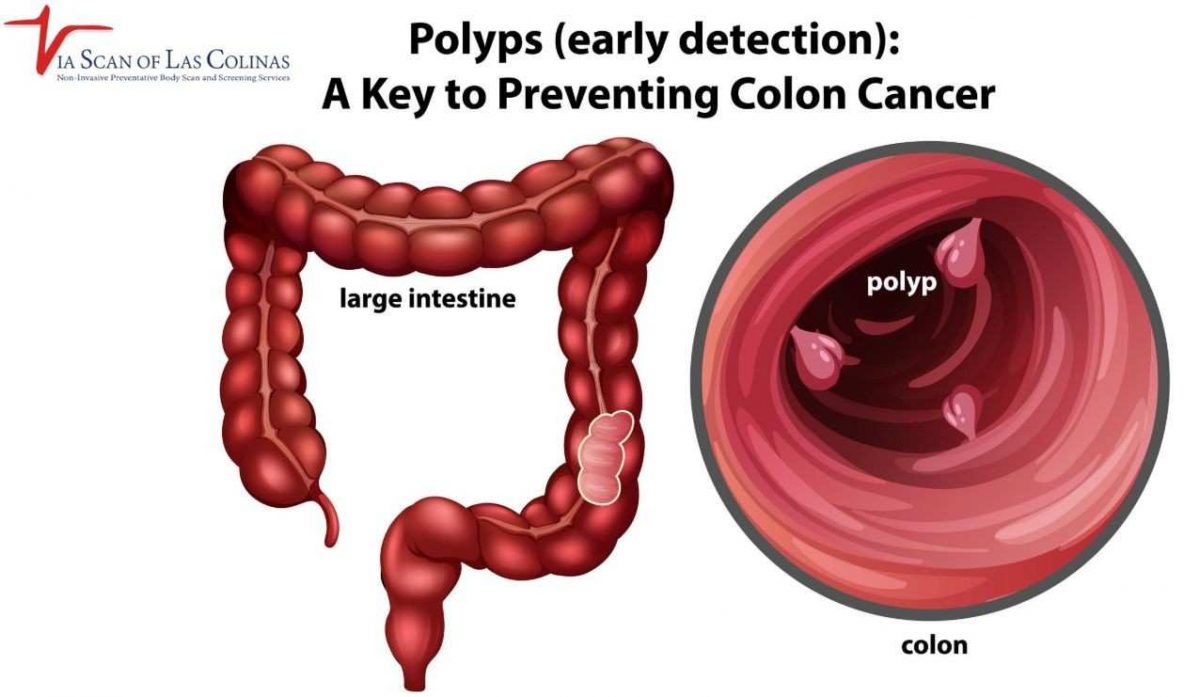
Polyps are little growths on the colon wall that appear as small mushrooms. Most don’t cause problems, but a few might transform into cancer. There is some good news here. Your doctor can take them out through the scope during the procedure.

Redness and swelling in specific spots can be a symptom of inflammatory bowel disease, ulcerative colitis or Crohn’s disease.

  • Circumstances in which the colon’s blood vessels are wider or twisted may lead to bleeding.
  • Diverticulosis refers to small pouches that sometimes develop in the colon wall. As we get older, such spots on the skin are typical and rarely cause issues.
  • The camera can identify both benign and cancerous growths called tumours, so problems can be addressed before they turn serious.
  • After surgery or inflammation, scar tissue sometimes appears and could cause difficulties.

It’s like setting up a security camera system inside your body – everything is detected.

Is it possible for a colonoscopy to locate colon cancer before it spreads?

Absolutely! Colonoscopies are especially powerful when used here. When tiny, harmless-appearing polyps develop, colon cancer may start in the colon and gradually change over 10-15 years. Problems such as cancer can be found early in a colonoscopy, making it simpler to treat.

The most amazing thing is that over 90% of people diagnosed early with colon tumors do well. That’s great to know! Research in the New England Journal of Medicine has found that colonoscopy screening reduces both the number of colon cancer cases and the death rate (Zauber et al., 2012).  

What It Means to Catch Cancer Early:

  • When found in Stages 0-1, the cancer is usually treatable by surgery alone.
  • Polyps with a chance of turning cancerous may be removed before they do so.
  • Critical Places – Need to be watched more carefully

Fixing security vulnerabilities is like catching a small leak in your roof so it doesn’t cause a big flood. It matters a lot if you notice symptoms early.

Does a Colonoscopy Reveal Issues Other Than Cancer?

You bet! People usually talk about cancer screening, but colonoscopies are preferred for many diagnostic jobs, just like the Swiss Army knife. They may also expose other aspects of our lives:

  • Crohn’s disease and ulcerative colitis are conditions from the IBD group in which the bowel swells and becomes inflamed.
  • If you have IBS, the colonoscopy allows your doctor to check for different conditions that have similar symptoms.
  • If blood is visible in your stool, a colonoscopy allows doctors to find the source of the bleeding.
  • Bacteria or parasites may lead to changes that become visible in the colon.
  • Structural Problems, such as twisting in the intestines, narrow spots, or anatomical obstacles, may be noticed as the procedure progresses.

It works a lot like a detailed home checkup, except for your digestive system. 

Could There Be Anything Important That a Colonoscopy Doesn’t Detect?

I’m letting you know upfront that colonoscopies are very detailed but not flawless. Before you get too stressed, let’s see where we stand.

The things we might not catch:

  • Any polyps that measure less than 5 millimeters
  • Lesions that are found tucked away in the folds of the colon
  • Sections that remain hidden because of poor casting
  • Polyps that are flat and don’t jut out

Yet, There’s No Need to Panic:

  • Today’s colonoscopes come with high-definition imaging technology
  • Experienced doctors have mastered every section of the body.
  • Getting set up for LPP ahead of time leads to fan interaction.
  • The bulk of the missed lesions are not major and are harmless to start with

What Should a Normal Colonoscopy Result Look Like?

A normal outcome for your colon is almost perfect on your report card. That’s usually what it refers to:

  • No Polyps Found – Your whole colon feels smooth and healthy with no abnormal clumps.
  • No signs of inflammation are noticed, and the tissue resembles pink, healthy tissue.
  • It All Looks Correctly Shaped and Placed.
  • Easy Trip – Your colonoscope made its way alongside the healthy and diseased areas of your colon.

Usually, once your screening colonoscopy is normal, you can wait 10 years before your next test. You might call it a hall pass from bowel pain for 10 years!

What Steps Should I Follow After Having a Colonoscopy?

The part everyone seems to want information on is the after-effects of a colonoscopy. Here’s what to focus on after your procedure:

Minutes and Hours Immediately After a Storm:

  • Just relax until the medication wears off.
  • Do not operate heavy machinery or make decisions for a while (as sedatives can cause you to be confused)
  • Make sure to eat foods that aren’t heavy and drink a lot of water.
  • It’s perfectly fine if you feel a bit bloated – you should expect that as you try your first fermented foods.

The first 24 to 48 hours are important.

  • After a short time, try eating your regular meals again.
  • Please don’t overdo it when you exercise.
  • Drink plenty of water to aid your body’s recovery
  • Stop and pay attention if you see signs of severe pain, fever or bleeding.

Keeping a few simple points in mind will help you recover properly from a colonoscopy.

  • Attend your next appointment so the doctor can explain your test results.
  • Ask for explanations when there are things you don’t understand
  • Stop any drugs your doctor suggested, as needed.
  • Remember that you made a great choice for your health!

Normally, people recover fully in only a day. Getting through colonoscopy recovery is generally much less difficult than the preparations you made before.

Choose Our Preventive Colonoscopy Scan

Early Detection Saves Lives!

    • Accurate
    • Quick Result
    • Affordable

Conclusion 

It doesn’t matter if you have scheduled testing or are experiencing symptoms; gathering knowledge is very important. Understanding what happens inside your body helps you take care of yourself.

ViaScan understands that wellness scanning and screening involve not only medical steps, they give you information that helps you live healthier. Taking care of your health makes sense, and it’s the best choice you can make.


What-diseases-can-be-detected-by-a-colonoscopy-1200x800.jpg
19/May/2025

Are you also dreading the test that many people avoid: the colonoscopy? The moans of pain and protest are something I’m already used to hearing. However, what if you knew that this short nap of sedation could mean the difference between life and death? The doctor might learn the most about your health by checking your rear view.

While it might not be an ideal way to spend a day, learning what a colonoscopy can catch could motivate you to make that call and schedule the procedure. Let’s examine the various medical situations this behind-the-scenes work may uncover!

What Is a Colonoscopy? And Why Should Everyone Know It’s So Important?

Just like a photoshoot, a colonoscopy is designed to help find any issues in your colon. During this examination, a tiny camera on the colonoscope takes clear images of your colon’s inner walls.

A colonoscopy screening is like putting a security system into your body. Problems can often be found at the earliest stages, which is when treatment is least complicated. With colonoscopies, doctors can observe and manage any issues they see during the initial visit.

Could a Colonoscopy Spot Cancer in the Body Before It Develops?

Yes! This is why colonoscopies hold such value. What makes them special is their talent for noticing polyps that may be harmless at first but might eventually become cancerous.

Many times, a diagnostic colonoscopy finds potential problems, like polyps, in the colon long before they turn cancerous. Treat it to intercept an individual before they act on their crime! Cancer development is prevented because the polyps are removed during the procedure.

A study in the New England Journal of Medicine showed that having a colonoscopy and removing polyps can reduce deaths from colorectal cancer by almost 53% 

Can a Colonoscopy Find Specific Types of Cancer?

The top superstar in detection turns out to be colorectal cancer, as it is the third most common cancer for both men and women. However, this flexible screening measure offers more than just the specifics listed here.

Colonoscopy can detect a variety of illnesses.

  • All kinds of colon cancer, no matter what stage
  • Cancer that begins in the last sections of the colon is called rectal cancer.
  • Clues to anal cancer are usually uncommon.
  • There are times when cancer cells are found in the lymph nodes from other organs.

Suppose you get regular screenings at a well-known wellness screening centre. In that case, these cancers can sometimes be treated before they begin sending their unbidden invitations to other locations in your body.

What Other Serious Illnesses Can a Colonoscopy Catch?

Your colonoscopy is working hard. But it also helps detect other health concerns.

  • Crohn’s disease and ulcerative colitis, known as Inflammatory Bowel Disease (IBD), can cause inflammation, irritation and harm to the digestive tract.
  • Small outpouches that may develop in your colon and could become infected are known as diverticulosis and diverticulitis.
  • Intestinal Bleeding: Looking for what causes blood to be found where it shouldn’t
  • Bowel Obstructions refer to conditions where waste is obstructed from leaving the bowel.
  • Strictures: Widening of the colon that may lead to significant obstructions

Think about your colonoscopy as the best clue-solver that the other tests fail to unveil!

Can a Colonoscopy Help with the Diagnosis of Infections or Parasites?

Your colonoscopy can reveal any unwanted things in your colon! It is used to spot several infections and parasites that might be present.

  • C. difficile can cause inflammation by triggering bacterial infections.
  • Infections like Giardia or Entamoeba are known as parasites.
  • Pseudomembranous colitis is an inflammation that results from using some antibiotics.
  • CMV infections are found in the colon
  • Other tiny organisms can settle in your intestines.

Finding parasites can be crucial for anyone with mysterious digestive issues or for someone returning from an area where parasites are common.

Could It Help Reveal Why I Am Experiencing Digestive Troubles or Regular Bloating?

If you have been seeing several gastroenterologists but still don’t know what is wrong with your digestion, a diagnostic colonoscopy may provide answers.

It may reveal underlying issues that explain those troubling ailments.

  • Things that result in chronic diarrhoea or constipation
  • Possible explanations for constant stomach pain
  • Things that may lead to unexplained weight loss
  • Who could be responsible for painful bloating
  • Reasons for changes in bowel habits

Many find it comforting to finally get answers after years of experiencing unpleasant symptoms without much success in treatment. Sometimes, spotting the problem with early screening can make it apparent how to repair it.

Do I Need a Colonoscopy?

If you never felt the need, you might think that colonoscopies are unnecessary. The answer? I think it’s true.

There are substitutes, but colonoscopy is preferred for several reasons.

  • It helps you to see your colon from start to finish.
  • Your doctor will take steps quickly if something is discovered.
  • It provides the best and detailed results possible
  • If the screen is negative, you do not have to be tested for a while.

Would you prefer an in-depth checkup of your house that addresses all problems or a quick check where corners might be missed?

How Frequently Should I Go for a Colonoscopy?

Unless there are reasons to be more careful, typical folks should start screening every decade at age 45. It’s common for your timeline to be different because of:

  • In your family, there have been cases of colorectal cancer or polyps.
  • Irrational beliefs about the disease
  • Earlier colonoscopy findings
  • Diseases related to genes that raise the risk of cancer
  • Symptoms that doctors will investigate

If your doctor thinks you are at greater risk or if polyps or similar issues were found in your earlier screening, they may advise you to have more colonoscopies.

Choose Our Preventive Colonoscopy Scan

Early Detection Saves Lives!

    • Accurate
    • Quick Result
    • Affordable

Conclusion

While colonoscopies may not be the most interesting experience, they are extremely helpful. They help prevent cancer and uncover what causes stomach aches, all for the small price of a day of discomfort.

If you’re stuck choosing whether to make an appointment, remember it may lead to a healthier future. Plus, with ViaScan making it possible to have a comfortable and modern colonoscopy within a full-body wellness scan, the experience keeps getting better.

Take care of your colon as it needs to. Besides, your car has suffered through your bad habits all these years, so take care to keep it in good condition.


What-is-a-Colonoscopy.jpg
06/Jan/2025

Colonoscopy is a kind of medical examination of the large intestine, and it mainly helps to collect important information about the state of the person’s gastrointestinal tract. It is one of the most routine screening tests, especially for those who have a family history of colon cancer or exhibit other symptoms such as changes in bowel movement, loss of weight, among others, and incessant stomach pain. A colonoscopy scan employs a flexible tube with a built-in compact camera called the colonoscope to examine polyps, tumors, or signs of inflammation. The procedure is essential in screening, diagnosing, and preventing major gastrointestinal illnesses, especially colon cancer.

What do you think the Colonoscopy Procedure involves?

This colonoscopy process is less invasive and normally takes approximately half an hour of the period assigned to it. The procedure involves the passage of a thin, flexible tube with a camera and light on its end (colonoscope) into the colon through the rectum. This enables the doctor to examine the lining of the colon to determine whether it is diseased, inflamed, or contains growths. In some cases, it may be possible to take small pieces of tissue (biopsies) for further examination, and any growths, such as polyps, that need to be removed can often be done at the same time. The operation is usually done under anesthetic, particularly because the patient would feel uncomfortable most of the time, but the procedure is generally well-endowed by people.

A study in the American Journal of Gastroenterology (2020) establishes that colonoscopy remains the best method of screening for colon cancer because it accurately identifies pre-cancerous changes that may lead to cancer, especially in the initial stages.

Why is a Colonoscopy scan needed to diagnose Colon Cancer?

A colonoscopy scan is another effective method through which colon cancer is most often diagnosed at an early stage. Colon cancer begins with a polyp that forms in the colon wall and may then actually take years to develop into a malignant growth. As these polyps develop into colon cancer, doctors can conduct colonoscopy tests, assess them, and remove them before growing any larger. The American Cancer Society (2023) noted that colon cancer currently ranks as the third most prevalent type of cancer for both males and females. Still, when detected early enough, the chances of treatment and survival are boosted. Annual colonoscopy screenings are suggested for anyone 50 and older or for those individuals who have other risk factors, such as a family history of colon cancer or other types of cancer.

What Is a Colonoscopy Procedure? How does it work, and how do you prepare for it?

To perform this procedure, patients need to adhere to certain preparations that prepare the colon for the procedure and clear it of any content. There is usually a preparation where a patient does not eat anything for 24 hours before the intervention and then takes a solution that is supposed to clear the bowel out. The result of this solution is loose stool to wash out any remaining stool in the colons for a colonoscopy process.

The patient is administered a preoperative sedative to reduce patient discomfort. The colonoscope is then passed into the rectum and slowly advanced through the colon, and the doctor observes images on a screen. However, like any other procedure, patients sorely complain of some degree of bloating or slight cramps caused by the air that is used to distend the colon as a means of getting a better view of the colon lining. During the recovery process from the sedative administered, patients are observed before being discharged, and the majority go home on the same day.

What are the risks or complications of Colonoscopy?

In most cases, colonoscopy is safe, but the procedure has potential risks that can develop after the colonoscopy procedure is performed. These may include the following: bleeding if, for instance, a biopsy was done or a polyp was then removed, or a very negligible risk of perforation, this being a tear in the colon wall. Other possible hazards that may arise because of the procedure include infection or allergic reactions to the sedation done to the patient during the procedure. However, such complications are very rare, and the general risk is low, provided an experienced gastroenterologist undertakes the procedure.

A study published in the Lancet Gastroenterology & Hepatology in 2020 shows that the probability of Colon Cancer complications is very low between 0.1% and 0.3%. The adverse effects of colon cancer early detection seem minuscule compared to the advantages of colonoscopy, so it is an important preventive measure.

Choose Our Preventive Colonoscopy Scan

Early Detection Saves Lives!

    • Accurate
    • Quick Result
    • Affordable

Conclusion

A colonoscopy is a useful medical procedure that has a significant role in diagnosing and preventing colon cancer. With the colonoscopy scan, doctors can see such things as polyps or tumors, which, being unseen initially, can only later reveal symptoms of their existence. The colonoscopy procedure is minimally invasive and relatively safe for most patients, but for the process to be effective, the necessary preparations need to be made. It is advised that persons presenting high-risk factors for developing colon cancer should undergo screenings, including age above 50 years and family history of the disease. Screening through colonoscopy has been proven to save lives, hence being an exceptional discovery in the current health systems. In this generation, VisScan provides the best colonoscopy services through quality equipment and well-trained service providers who can help clients catch their sickness early and take the necessary precautions.


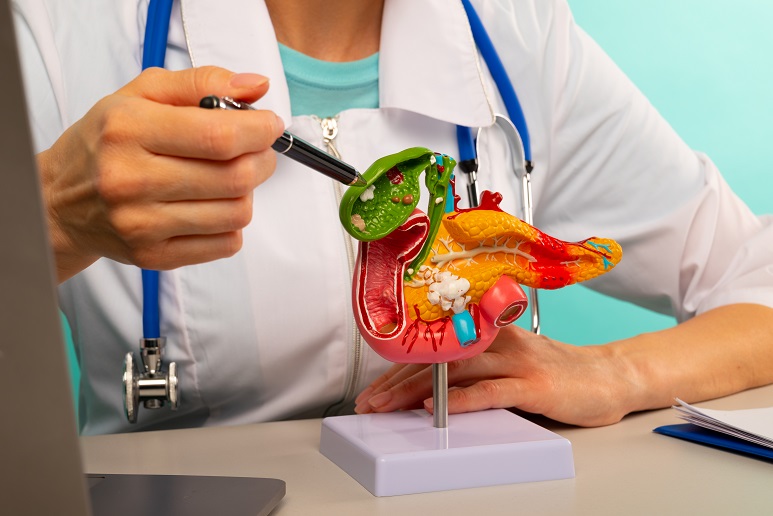
doctor-gynecologist-showing-pen-plastic-model-human-pancreas-closeup.jpg
24/May/2024

Taking care of your gut health is equally important as taking care of your heart health. In today’s era, colonic and pancreatic cancers have become fairly common, leading to rise in mortality rates. With the introduction of CT scans, detecting cancers has become far more easy than it was in the past. A cancer can be caught in its earlier stages due to the advent of CT scans for cancer detection. The diagnosis rate has become higher due to the latest technology scanners that detect minute cancer cells at its earliest. In this article, we will learn more about how CT colonoscopy has changed the world. 

What is a Virtual Colonoscopy?

A virtual colonoscopy, also known as a CT colonoscopy scan, is the use of multiple low-dose radiations to create X-ray images of the colon and rectum using a CT scanner. It is a special type of x-ray that takes numerous pictures of your colon and rectum. The X-ray films are merged using an advanced computer software system to produce three-dimensional images of the colon. It is quite better and more acceptable than the conventional colonoscopy due to its non-invasive nature. This results in a higher acceptance rate by patients. 

How does a Colonoscopy Work?

Like any other CT scan, a CT colonography procedure uses radiation, either in the form of light or radiation. Multiple X-ray beams are passed all over the area to create slices of images of the colon and rectum. Before placing the patient lying on the table inside the scanner, a small tube is inserted about two inches into the rectum, and air is passed into the rectum and colon to inflate it and prevent any folds inside the intestine that could lead to misdiagnosis later on. 

No anesthesia is required for this step. After slices of images are taken from the front, the patient is asked to turn on their back so images from the back can also be taken. The entire procedure hardly takes 15 minutes to carry out. 

What does a Colonoscopy Show?

A colonoscopy scan shows detailed three-dimensional images of the patient’s colon and rectum. It looks for any signs of cancerous tissues or polyps that might turn cancerous later on. A contrast material is used to differentiate different tissues and bones. Usually, cancerous cells and tissues give out a different color from normal tissues. Apart from that, a colonoscopy scan also helps provide a two-dimensional view of the surrounding areas like the pelvis and abdomen. 

What is the prep for a CT Colonography?

A bowel prep is done a day before the CT colonography. The patient is asked to take only a liquid diet a day before the scan. It is recommended to clear all your bowel the night before the scan so as to allow the radiologist to differentiate a polyp from stool properly. Laxatives in pill or liquid form may be given to the patient to help clear all areas of the bowel. A few hours before the scan, the patient may be asked to stop all food and liquid intake to help properly visualize the colon. A barium or iodinated liquid may be given to help contrast the polyp from the stool. It helps to differentiate both of them. The patient is also asked to wear loose items of clothing, and all metal objects are taken out before the procedure. If you are pregnant, you must consult the doctor before taking a scan.

Will a Colonoscopy show liver damage?

A colonoscopy scan not only provides you with information about the colon and rectum. It also provides you with insights about organs around the colon and rectum, i.e., liver, pancreas, spleen, etc. A colonoscopy scan can aid in detecting liver diseases. A study shows there might be some colonoscopy findings in end-stage liver diseases like colon thickening, etc. However, to properly look for liver damage, you might need to get a separate liver CT scan. 

Why do I need a Colonoscopy after a CT scan?

In cases when a polyp is discovered, your doctor might need to remove the polyp through a conventional colonoscopy. Usually, a traditional colonoscopy is used as a means of minor surgery for polyp removal. When the malignancy is in its early stages, a CT scan might not be enough to check the extent of the disease. A conventional colonoscopy might be needed in that case. 

How long do CT Scan results take?

A CT scan procedure usually takes 15 to 20 minutes to carry out. However, the results of the CT scan may vary depending on the hospital or testing center. The images of the scan are compiled via computer software and created into a single scan. The radiologist then reviews your results and writes down all the findings within the scan. This process may take time. It may take a minimum of 24 hours to a maximum of 1 week for your CT scan results to come out.

Can a CT Scan detect Colon Cancer?

A CT scan can definitely detect colon cancer. It is considered the gold standard test in the detection of colon cancer. There are other tests also available, but a CT scan is regarded as the best. However, it also depends on the extent of the cancer. If the cancer is in its early stages, a CT scan might not be able to catch up on the mutated cells or tissues. A cancer that might have spread would, however, be detectable on a CT scan. It all comes down to how well the radiologist is able to detect such findings and report them in the scan. Hence, it is necessary to find a good scanning center that provides quality virtual colonoscopy near me. 

Choose Our Preventive Colonoscopy Scan

Early Detection Saves Lives!

    • Accurate
    • Quick Result
    • Affordable

How long does a Laxative Last?

Laxatives are medicines, pills or in liquid form, that help with constipation by stimulating bowel movements. There are different types of laxatives depending on their duration of action and form. The amount of time a laxative takes to work and to be eliminated from the body may vary. Some laxatives take a few minutes to work, whereas other laxatives may take hours to show any results. As far as eliminating the laxative is concerned, a laxative may be eliminated from the body either after passing a stool once; others may take a few hours after its peak concentration to eliminate from the body.

How Long should I wait to Eat after Taking a Laxative?

It depends on the type of laxative you’ve taken. Some laxatives work better on an empty stomach; some are preferably taken after a meal. However, if you’ve taken a laxative, it is recommended to wait at least 30 minutes to 1 hour for the laxative to absorb properly and be effective. Hence, there will be no effect on the working process of the laxative; it may just slow down the process of its absorption. Usually, laxatives are taken at night to let it absorb properly. 

Pictures of Blood in stool from Colon Cancer

Pictures of Blood in stool from Colon Cancer

Bowel Cancer Poop Pictures

Bowel Cancer Poop Pictures

Summary:

To summarize, taking care of your colorectal health is equally important. You shouldn’t neglect it since it leads to multiple diseases that will result in deterioration of your health. Via Scan of Las Colinas is one of the best scanning centers you can find for your CT colonography. We prioritize your health and well being.