
How To Get Rid Of Chest Congestion: When Imaging Can Help
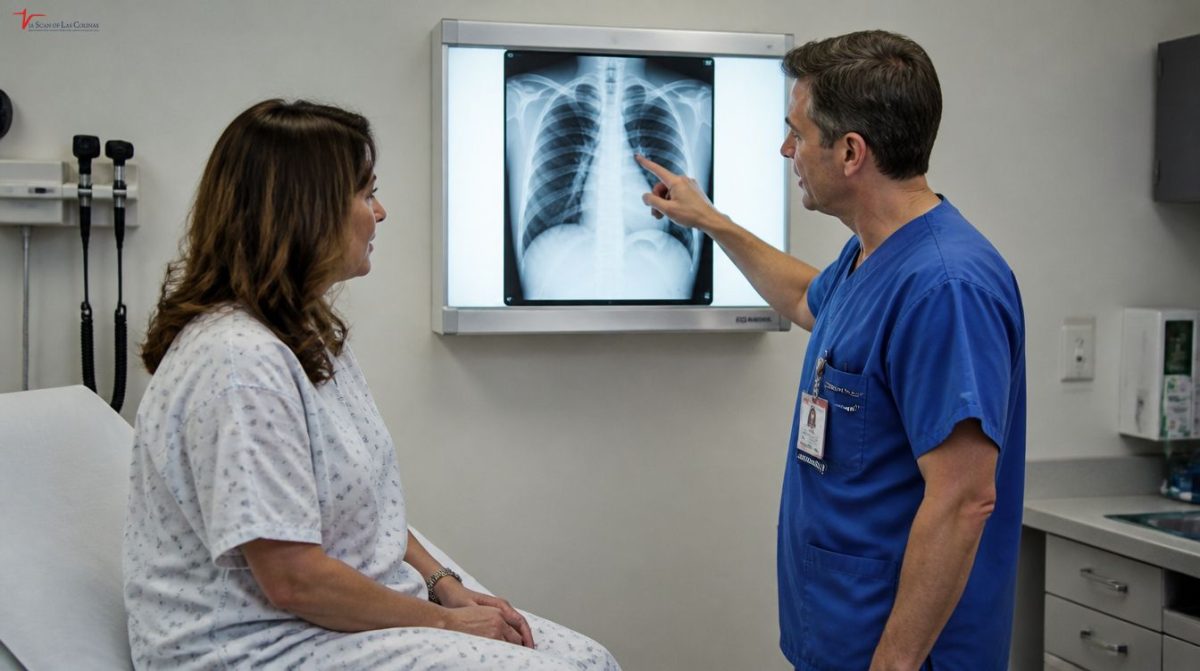

When you cough, it’s annoying and makes you feel heavy and tight inside your chest. Common colds or mild respiratory infections are the usual causes of most chest congestion and will resolve with home treatment in 1-2 weeks. However, sometimes congestion is an indicator of something that is more closely monitored.
Read about the causes of chest congestion, safe methods for chest congestion relief at home, and when symptoms require medical evaluation. We will also learn when to take an imaging test and when it is not indicated in order to know when to rest vs. seek treatment.
Why do you get chest congestion and how do you get rid of it?
Chest tightness can happen when mucus collects in the tubes that carry air. This can start after a cold. The flu can do it too. Allergies can bring on the same problem. In some cases, a mild lung infection is the reason. Often, it improves on its own after a few days, especially with at-home care.
Here are some common triggers:
- A cold
- The flu
- Seasonal allergies
- Bronchitis
Try these steps at home:
- Drink more fluids each day. Warm tea or warm water can help loosen thick mucus.
- How to get rid of chest congestion fast? Sit with steam for a bit. A hot shower may ease the tight feeling. If you try steam, be careful. Burns can happen fast.
- How to clear chest congestion? Use a humidifier if the air feels dry. More moisture in the room can make breathing feel easier. It may also help you clear mucus.
- Rest: Let the body get rest and energy to resist the root cause of the infection.
- Treatment with a remedy appropriate for the OTC: Expectorants, decongestants may be useful, use them as directed on the package.
When is it Time to See a Doctor for Chest Congestion?
With home treatment, most chest congestion goes away in 1 to 2 weeks. Some chest congestion symptoms, however, may indicate that home treatment is insufficient and that it would be best to get a professional medical opinion.
Identifying signs and symptoms that last or persist:
- Congestion that does not clear or gets worse over two weeks – see your GP for evaluation.
- A fever above 102°F, or a fever that lasts for more than a few days, can suggest a more serious infection.
- If you feel short of breath, hear wheezing, or cannot get enough air, do not wait. Get checked.
- Watch for chest pain that feels sharp, or pain that keeps getting worse, especially when you take a breath. Have it looked at soon.
- Thick mucus, or mucus with blood in it, should be reviewed by a clinician. Coughing up blood or very dark, thick mucus can also go along with an infection that needs attention.
- If you start to improve, then your symptoms come back and feel worse again, another infection may be forming.
When Can Medical Imaging Help Determine the Cause of Chest Congestion?
Imaging is useful when symptoms don’t go away or get worse, or a doctor wants to see inside the lungs to determine what is happening beyond the symptoms.
Imaging may be recommended in the following cases: If congestion lasts for weeks, breathing gets harder, fever continues or your doctor hears strange noises in your lungs. They can also identify fluid, inflammation or blockage that may not be well demonstrated during a physical exam, which may help to help explain why the symptoms are not responding to the typical home care.
Is it possible to detect infections or other conditions that cause chest congestion from an X-ray image?
Yes, imaging can provide a specific diagnosis for the persistent symptoms of chest congestion when home remedies and simple examinations and tests fail to reveal a diagnosis, giving clarity when standard treatment is not successful.
Identifying Pneumonia, Fluid Buildup, and Other Lung Problems:
- Imaging: Detection of pneumonia – Inflammation and fluid filling the air sacs in the lungs due to infection.
- Fluid around the lungs (pleural effusion) is seen on scans.
- In severe or persistent bronchitis, imaging will help determine the severity of airway inflammation.
- Structural problems: the scan can detect blockages, masses or other structural lung problems which are causing symptoms.
- Chronic conditions: Imaging can help assess chronic lung disease that can lead to persistent symptoms of congestion.
How ViaScan Supports Clarity When Symptoms Persist
Imaging is the answer when guesswork fails to yield the improvement in chest congestion that is expected, or when your doctor is recommending more close attention. At ViaScan, you get diagnostic imaging that helps provide a clear, detailed imaging of what’s going on inside your chest.
With our CT scan technology, we can obtain detailed cross-sectional images of your lungs to show if there are any signs of inflammation, fluid or other abnormalities, which standard tests may not identify. This assists in determining the particular cause of any sign and symptoms that are continuing, particularly pneumonia, bronchitis, or other respiratory issues.
Patients with symptoms that indicate more widespread lung involvement are offered a lung scan that is tailored to the lungs, specifically evaluating the lung tissue, airways and other areas of concern. The whole body scan is available with ViaScan for those who wish to obtain a more in-depth health evaluation than chest symptoms provide.
All imaging is performed by licensed medical personnel with state-of-the-art equipment and the results are offered in simple reports which you can present to your healthcare provider. We provide detailed diagnostic information, your doctor uses these with your symptoms and exam findings to decide what to do next.
Choose Our Preventive CT Scan
Early Detection Saves Lives!
-
- Accurate
- Quick Result
- Affordable

Conclusion
Chest congestion can typically be treated at home using fluids, steam, rest and time. However, if symptoms last for more than two weeks, or breathing gets more difficult or fever doesn’t improve, professional evaluation becomes important. When home and time has failed to give you clarity in your lungs, you can get answers from imaging by the services through ViaScan’s CT scan and lung scan. If your symptoms indicate something deeper, come get a clear answer from your recovery with a diagnostic scan at ViaScan.